


 Home
Home
I’ve been taking semaglutide for a while to help control my appetite and manage my weight, but I still feel hungry even after meals. I thought this medication was supposed to help me feel full and eat less. Could it be that my dosage isn’t right, or maybe my body is reacting differently? Are there certain foods or habits that make this hunger worse, and is it normal to still feel hungry sometimes while on semaglutide? Why does this happen?
Why Am I Still Hungry on Semaglutide?
Related Encyclopedia
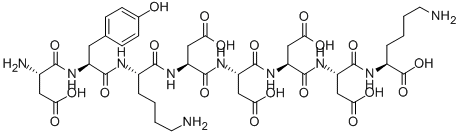
- 98849-88-8
- C41H60N10O20
- 1012.97
- All (3)
- China (3)
- (3)

- 910463-68-2
- C187H291N45O59
- 4113.57754
- All (53)
- China (51)
- (53)
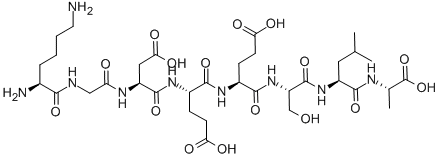
- 73984-05-1
- C34H57N9O16
- 847.87
- All (0)
- China (0)
- (0)
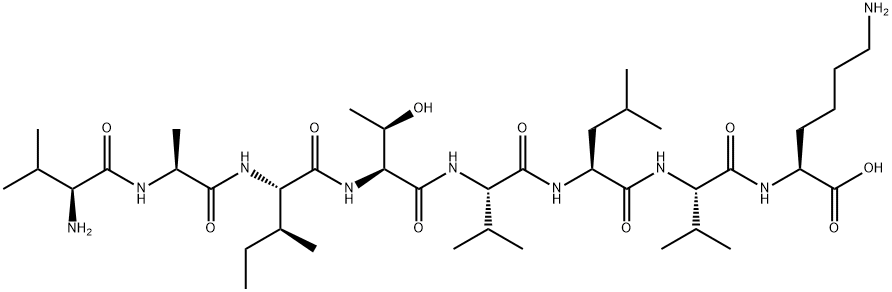
- 145224-99-3
- C40H75N9O10
- 842.08
- All (1)
- China (0)
- (1)

- 39016-05-2
- C137H225N37O49
- 3174.47
- All (1)
- China (0)
- (1)
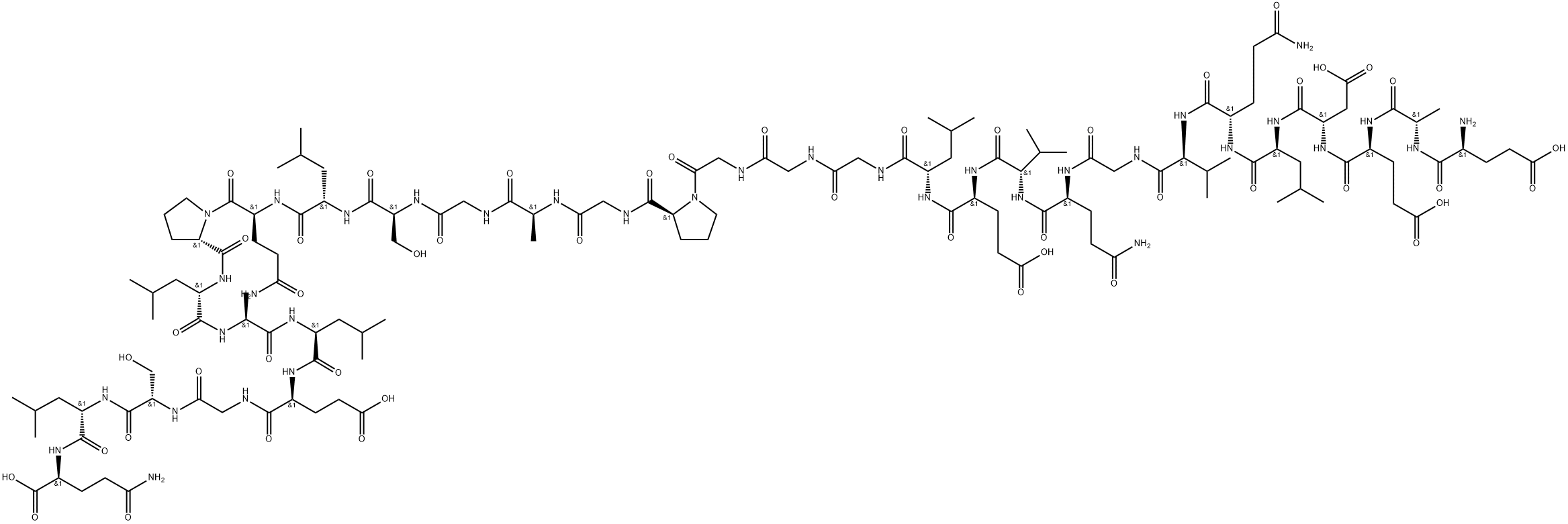
- 33017-11-7
- C129H211N35O48
- 3020.3
- All (1)
- China (0)
- (1)
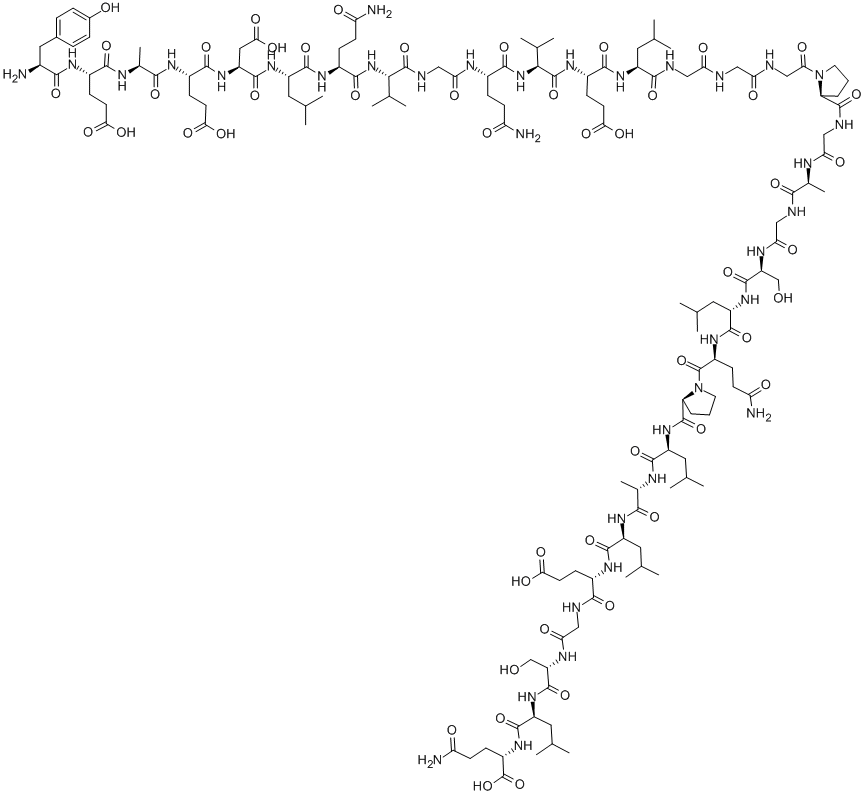
- 57327-90-9
- C138H220N36O50
- 3183.43
- All (0)
- China (0)
- (0)
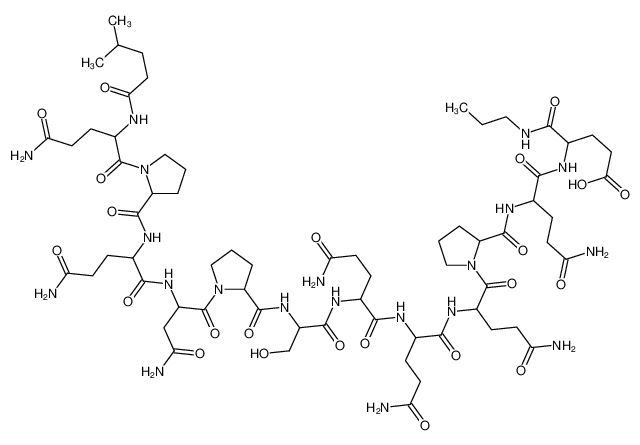
- 102362-76-5
- C109H175N31O35
- 2479.74250
- All (0)
- China (0)
- (0)
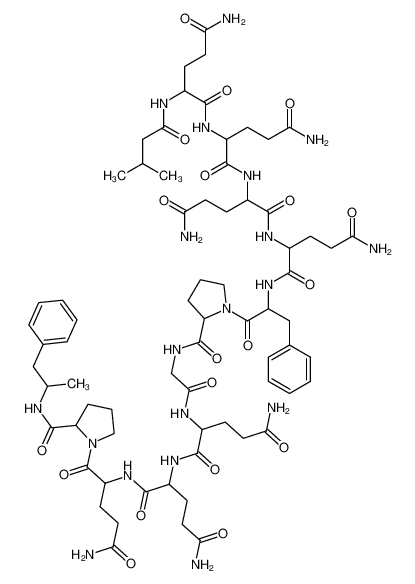
- 102380-93-8
- C170H238N44O48
- 3665.97472
- All (0)
- China (0)
- (0)
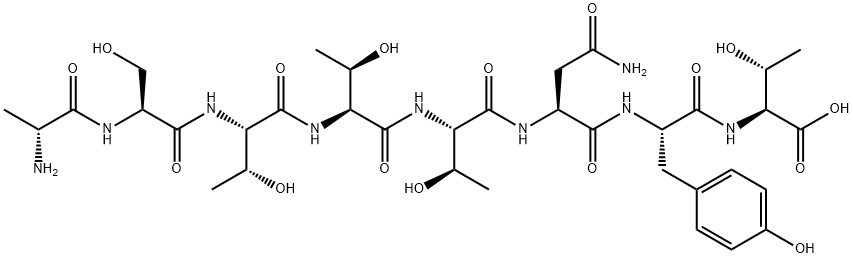
- 106362-33-8
- C35H55N9O16
- 857.86
- All (0)
- China (0)
- (0)
Related Products More >

- 74-79-5
- CNY Request For Quotation
- 74-79-4
- CNY Request For Quotation
- 74-79-3
- CNY Request For Quotation
- 74-79-3
- USD 92.0000
- 25kg
- 910463-68-2
- USD 300.0000
- 1g
- 74-79-3
- CNY 10.0000
- 25kg
- 910463-68-2
- USD 27.0000
- 50g
- 99287-08-8
- Request For Quotation
- Plastic bottles


If you want, I can also explain some simple tricks to manage those hunger pangs while taking semaglutide.
Another factor lies in the complex regulation of hunger, which involves multiple hormones and neural pathways beyond just GLP-1. Ghrelin, often called the "hunger hormone," is primarily secreted by the stomach and stimulates appetite. Semaglutide does not directly suppress ghrelin secretion in all individuals, and in some cases, the body may compensate for the drug’s effects by increasing ghrelin production, counteracting the appetite-reducing benefits. Additionally, leptin, which signals satiety, plays a role—if there are underlying issues with leptin resistance, even with semaglutide, the brain may not properly receive the "full" signal, leaving one feeling hungry.
It is also important to distinguish semaglutide from other weight management or anti-diabetic medications that target different pathways. For instance, some medications act on the central nervous system to suppress appetite directly, while others inhibit nutrient absorption. Semaglutide’s focus on glucose-dependent insulin release and gastric emptying means its appetite effects are more indirect, and thus more susceptible to interference from individual physiological differences. This is not a sign that the drug is ineffective, but rather that its mechanism interacts uniquely with each person’s body, and persistent hunger may reflect the need for adjustments in dosage, dietary habits, or a combination with other strategies.
The chemical structure of semaglutide allows it to remain active in the bloodstream longer than endogenous GLP-1, providing sustained appetite suppression. Yet, the perception of hunger is not solely dictated by circulating peptides. Neural circuits in the hypothalamus and gut-brain axis continuously integrate signals from glucose levels, amino acid availability, and gut stretch receptors. When these signals suggest energy is needed, the brain can still trigger hunger sensations even in the presence of semaglutide. Environmental and behavioral factors—such as habitual meal timing, palatable food exposure, and psychological stress—can also amplify perceived hunger, demonstrating that appetite control is a multidimensional phenomenon extending beyond pharmacological intervention.
In practical terms, individuals taking semaglutide may notice reduced appetite over time, but intermittent hunger episodes can remain, particularly in situations of energy deficit or emotional triggers. Understanding this interplay between chemical modulation and behavioral influence is important not only for personal weight management but also for broader medical applications, such as designing tailored nutritional strategies or therapeutic regimens. Semaglutide’s effect on hunger provides insight into the integration of hormonal, neural, and environmental factors, illustrating how even targeted biochemical interventions interact with the complex systems governing human feeding behavior.
For example, someone with a history of insulin resistance might experience delayed hunger suppression due to underlying metabolic dysregulation. Semaglutide’s effects also depend on consistent use over weeks or months, as the body gradually adapts to the new hormonal signals. In some cases, the prescribed dosage may not yet be optimized for the patient’s specific needs, requiring careful titration under medical supervision.
Dietary habits and lifestyle play a role too. Even with semaglutide, consuming highly processed or low-satiety foods can trigger hunger signals. A patient eating large volumes of low-calorie-density foods might feel physically full but still experience psychological hunger, highlighting the complex interplay between physiology and behavior. The drug isn’t a standalone solution but works best alongside mindful eating and structured meal planning.
Individual differences in GLP-1 receptor sensitivity or gut microbiome composition could further explain why hunger persists for some. Genetic factors influence how strongly the body responds to the drug, and gut bacteria modulate hormone production and nutrient absorption. This variability underscores the importance of personalized approaches in managing appetite while on semaglutide.