


 Home
Home
Hello, I want to ask about the temperatures at which different types of plastic melt, what health risks might arise from exposure to melted plastic fumes, and how to safely handle plastics during heating or manufacturing processes. Could you provide detailed guidance?
What temp melts plastic, and how can understanding this help reduce health risks associated with plastic fumes and burns?
Related Encyclopedia

- 9003-11-6
- (C3H6O.C2H4O)x
- 102.13
- All (13)
- China (2)
- (13)

- 9003-07-0
- C22H42O3
- 42.08
- All (98)
- China (24)
- (98)
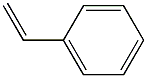
- 25086-18-4
- C8H8
- 104.14912
- All (33)
- China (14)
- (33)
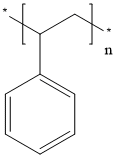
- 9003-53-6
- [CH2CH(C6H5)]n
- 2.01588
- All (33)
- China (14)
- (33)
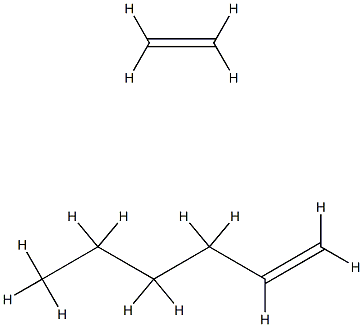
- 25213-02-9
- C8H16
- 112.21264
- All (24)
- China (2)
- (24)
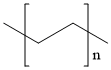
- 9002-88-4
- (C2H4)n
- 28.05316
- All (24)
- China (2)
- (24)
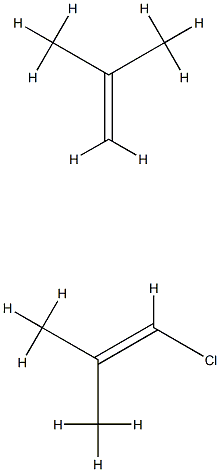
- 68442-33-1
- C8H15Cl
- 146.6577
- All (2)
- China (0)
- (2)
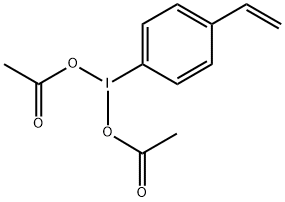
- 36290-94-5
- C12H13IO4
- 348.14
- All (0)
- China (0)
- (0)
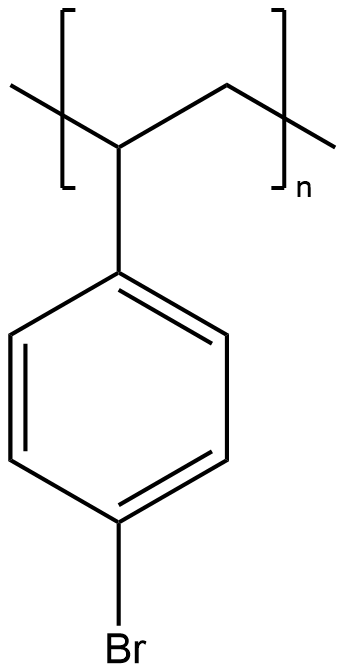
- 88497-56-7
- (C10H13Br)n
- 213.11422
- All (24)
- China (8)
- (24)
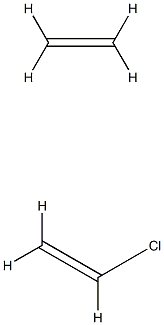
- 63231-66-3
- C4H7Cl
- 90.55138
- All (3)
- China (3)
- (3)
Related Products More >
- 63231-66-3
- CNY Request For Quotation
- 9002-88-4
- Request For Quotation
- 25322-69-4
- Request For Quotation
- 25322-69-4
- Request For Quotation
- 25322-68-3
- Request For Quotation
- 9003-07-0
- CNY 10.0000
- 25kg
- USD 20.0000
- 25kg
- USD 15.0000
- 25kg


From a health perspective, inhaling fumes from melted or burning plastics can expose individuals to toxic chemicals like dioxins, styrene, and phthalates, which may irritate the respiratory system, trigger allergic reactions, or even have long-term carcinogenic effects. These risks are more pronounced in poorly ventilated areas or with repeated exposure. Additionally, direct contact with hot, melted plastic can cause burns or skin irritation.
To reduce health risks, avoid heating plastics beyond their recommended temperatures, ensure good ventilation when working with plastics, and use protective equipment such as masks and gloves. For applications requiring heat, consider using plastics specifically designed to withstand higher temperatures, or substitute with safer, biodegradable materials when possible.
Most plastics are held together by covalent bonds within the polymer chains, while weaker intermolecular forces like Van der Waals forces or hydrogen bonds influence how tightly these chains pack together. For example, polyethylene (PE), a common plastic, has relatively simple hydrocarbon chains and melts around 110–130°C. In contrast, polymers like polyvinyl chloride (PVC) or polystyrene (PS) have more complex structures with polar groups or aromatic rings, resulting in different melting behaviors—PVC melts around 100–260°C depending on plasticizers, while polystyrene softens near 240°C.
The melting process involves breaking or loosening the intermolecular forces between polymer chains so they can slide past each other, turning the solid plastic into a viscous liquid. The strength and polarity of these interactions influence how much energy is needed for melting. Nonpolar plastics with flexible chains usually melt at lower temperatures, while polar or rigid polymers with strong intermolecular forces require higher temperatures.
Thermal stability is another important factor. Some plastics degrade chemically before they melt, undergoing oxidation or chain scission when heated too much, releasing potentially harmful substances. This is why industrial processes carefully control heating rates and temperatures to avoid damaging the material.
In practical applications, understanding melting points helps engineers select appropriate plastics for products exposed to heat, such as food containers or automotive parts. It also influences recycling techniques, where plastics are melted and reshaped.
Imagine you’re reheating leftovers in a plastic container. If it’s made of polypropylene (PP)—common in microwave-safe containers—it’ll start to warp around 266°F (130°C). But if you accidentally grab a polystyrene (PS) takeout box (the crumbly white stuff), it’ll melt into a gooey mess at just 212°F (100°C)—boiling water temps! I learned this the hard way when I tried to microwave a styrofoam cup of soup (spoiler: it collapsed like a sad soufflé).
Here’s the science: Plastics are polymers—long chains of repeating molecules. Their melting points depend on how tightly those chains are linked. Thermoplastics (like PET, PP, and PS) have chains that slide apart when heated, so they melt smoothly. Thermosets (like epoxy or Bakelite) have chains cross-linked with strong bonds, so they don’t melt—they just char or burn (think of a burnt toast smell from overheated plastic utensils).
Fun fact: Even within the same plastic type, additives can change the game. A black plastic car bumper might handle higher heat than a white one because carbon black (a pigment) acts as a heat stabilizer. And some “high-temperature” plastics (like PEEK, used in aerospace) can survive 600°F+ (315°C+)—hot enough to fry an egg on!
Pro tip for everyday safety: Check the recycling symbol on plastic items—it often hints at their heat tolerance. Numbers 1 (PETE) and 5 (PP) are generally microwave-safe (but still avoid overheating). Numbers 6 (PS) and 7 (other/mixed) are iffy—they can leach chemicals or melt. And never, ever put plastic in the oven or on a stovetop unless it’s explicitly labeled “oven-safe” (like some silicone bakeware).
Bonus hack: If you’re crafting with plastic (like shaping a PVC pipe for a DIY project), use a heat gun on LOW setting and keep it moving. Focus too long in one spot, and you’ll end up with a melted puddle instead of a smooth bend!
Bottom line: Plastic’s melting point is as varied as ice cream flavors. When in doubt, treat it like a delicate dance partner—keep the heat gentle, and you’ll avoid a sticky disaster. Stay curious, and maybe keep a fire extinguisher handy for those “oops” moments! ??
A big myth is that all plastics can handle boiling water (212°F/100°C). But as you can see, PVC would melt or warp, and even PET might soften, which is why you shouldn’t pour boiling tea into a plastic water bottle. Another mistake is thinking “if it doesn’t look melted, it’s fine.” But plastics can release chemicals (like BPA in some older plastics) even when they’re just softening, not fully melting—bad news if it’s touching food or drinks.
For home use, knowing these temps helps avoid accidents. Keep plastic away from direct heat sources: don’t set a plastic bowl on a hot stovetop, even if it’s turned off but still warm. When microwaving, check the container—look for “microwave-safe” labels, which mean the plastic (usually PP, or polypropylene) can handle the heat (up to around 250°F/121°C) without melting or leaching. Skip microwaving any plastic that’s cracked or old, as heat can worsen damage.
In the kitchen, use glass or metal for hot foods—like storing leftover soup or heating up oatmeal. If you need to use plastic, let food cool a bit first (below 160°F/70°C) before pouring it in. For outdoor stuff, don’t leave plastic items (like garden hoses or kids’ toys) in direct sunlight on super hot days—temperatures inside a car can hit 170°F (77°C) or more, which can warp or melt even sturdier plastics.
If plastic does melt (like a spoon left on a hot pan), let it cool completely before handling. Scrape off what you can with a plastic spatula (metal might scratch the pan), then clean with warm soapy water. Avoid breathing in fumes—open a window if it’s a small mess, or step outside if it’s bigger.
Small habits matter: checking labels, using the right containers for hot items, and keeping plastic away from extreme heat keeps your stuff in good shape and avoids risky chemical exposure. It’s not about being perfect—just being mindful of what heat can do to different plastics.