


 Home
Home
Hello, please. The answer is yes, calcium carbonate is beneficial for bones. It's because calcium is a crucial mineral for bone structure and strength. Could you explain the specific mechanisms by which calcium carbonate promotes bone health, what the relationship between calcium carbonate and vitamin D is, and how effective long - term calcium carbonate intake is in preventing osteoporosis?
Is Calcium Carbonate Good for Bones? Unveiling Its Role in Skeletal Health
Related Encyclopedia
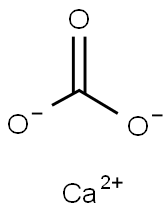
- 1317-65-3
- CCaO3
- 100.09
- All (868)
- China (56)
- (868)
- 792848-15-8
- CCaO3
- 100.08700
- All (868)
- China (56)
- (868)
- 471-34-1
- CCaO3
- 100.0869
- All (868)
- China (56)
- (868)
- 85706-85-0
- C27H40O3
- 412.60500
- All (0)
- China (0)
- (0)
- 85706-88-3
- C26H43NO
- 385.62600
- All (0)
- China (0)
- (0)
- 15634-14-7
- CH2O3.Ca.6H20
- 208.17900
- All (0)
- China (0)
- (0)
Related Products More >

- CNY Request For Quotation
- CNY Request For Quotation
- CNY Request For Quotation
- 471-34-1
- CNY 50.0000
- 25kg
- 471-34-1
- Request For Quotation
- 1ton
- 471-34-1
- Request For Quotation
- 25kg
- 471-34-1
- Request For Quotation
- 1ton
- 471-34-1
- Request For Quotation
- 25kg


It promotes bone health by supplying calcium ions, which are absorbed into the bloodstream and used to build and repair bone tissue. This process helps replace calcium lost through daily wear, supporting skeletal integrity.
Calcium carbonate and vitamin D work synergistically: vitamin D enhances intestinal absorption of calcium, ensuring more of the mineral from calcium carbonate is utilized by bones rather than excreted.
Long-term use of calcium carbonate can help prevent osteoporosis, especially when paired with vitamin D. It slows bone loss by maintaining adequate calcium levels, reducing fracture risk, though effectiveness varies with dosage, diet, and individual factors.
The reason calcium carbonate is widely used in supplements is its high calcium content by weight—about 40% elemental calcium—making it a cost-effective and efficient source. Once ingested, it dissolves in the stomach’s acidic environment, releasing calcium ions (Ca²⁺) that are absorbed in the intestines and utilized by the body for bone formation and metabolic functions.
In daily life, calcium carbonate is found not only in over-the-counter calcium supplements but also in fortified foods such as plant-based milks, cereals, and orange juice. It is also used as an antacid to relieve heartburn and indigestion, showcasing its dual health benefits. In addition to dietary uses, it plays a role in prenatal vitamins to support fetal bone development during pregnancy.
However, excessive intake can lead to side effects such as kidney stones or gastrointestinal discomfort, so consumption should align with recommended daily allowances. Keywords like bone health, supplement, absorption, and safety emphasize the importance of balanced and informed use. Overall, calcium carbonate is a vital, accessible, and effective compound for supporting skeletal strength and overall well-being.
1. How Calcium Carbonate Boosts Bone Health
Biological Mechanism:
1.
Mineralization:
•
Provides elemental calcium (40% by weight) for hydroxyapatite crystals in bones
•
Covers 30-40% of daily calcium needs (1,000-1,200 mg for adults)
2.
Hormonal Regulation:
•
Suppresses parathyroid hormone (PTH), reducing bone resorption
•
Maintains serum calcium at 8.5-10.2 mg/dL to prevent bone breakdown
3.
Structural Support:
•
Increases bone mineral density (BMD) by 1-2% annually with consistent use
Clinical Proof:
•
Postmenopausal women taking 1,200 mg CaCO₃ daily show 30% lower hip fracture risk (NIH-AARP study)
2. The Calcium-Vitamin D Partnership
Synergistic Effects:
1.
Enhanced Absorption:
•
Vitamin D increases intestinal calcium absorption from 30% to 60%
•
Activates calbindin proteins for calcium transport
2.
Dosage Ratio:
•
Optimal: 600-800 IU vitamin D per 1,000 mg CaCO₃ (Endocrine Society guidelines)
3.
Deficiency Risks:
•
Without vitamin D, <15% of calcium is absorbed (wasting supplements)
Best Practice: Take CaCO₃ with meals (acid helps absorption) and vitamin D with fat (fat-soluble vitamin)
3. Long-Term Osteoporosis Prevention Data
Study
Duration
Results
WHI (Women’s Health Initiative)
7 years
12% fewer fractures in CaCO₃ + D group
Rotterdam Study
10 years
20% lower vertebral fracture risk
NHS (Nurses’ Health Study)
18 years
No benefit beyond 700 mg/day dietary calcium
Critical Notes:
•
Over-supplementation (>2,000 mg/day) may increase kidney stone risk
•
Elderly patients need vitamin D co-administration to prevent deficiency