


 Home
Home
Hello, please. The answer is that for adults, consuming over 2500 mg of elemental calcium from calcium carbonate daily often counts as excessive. It's because the body can't efficiently absorb and process beyond this. The daily safe upper limit is around 2500 mg. Could you explain why this limit exists, what health risks over - intake brings, and how we can effectively avoid taking too much calcium carbonate?
How Much Calcium Carbonate Is Too Much? Unveiling Overdose Risks
Related Encyclopedia
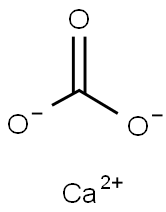
- 1317-65-3
- CCaO3
- 100.09
- All (868)
- China (56)
- (868)
- 792848-15-8
- CCaO3
- 100.08700
- All (868)
- China (56)
- (868)
- 471-34-1
- CCaO3
- 100.0869
- All (868)
- China (56)
- (868)
- 15634-14-7
- CH2O3.Ca.6H20
- 208.17900
- All (0)
- China (0)
- (0)
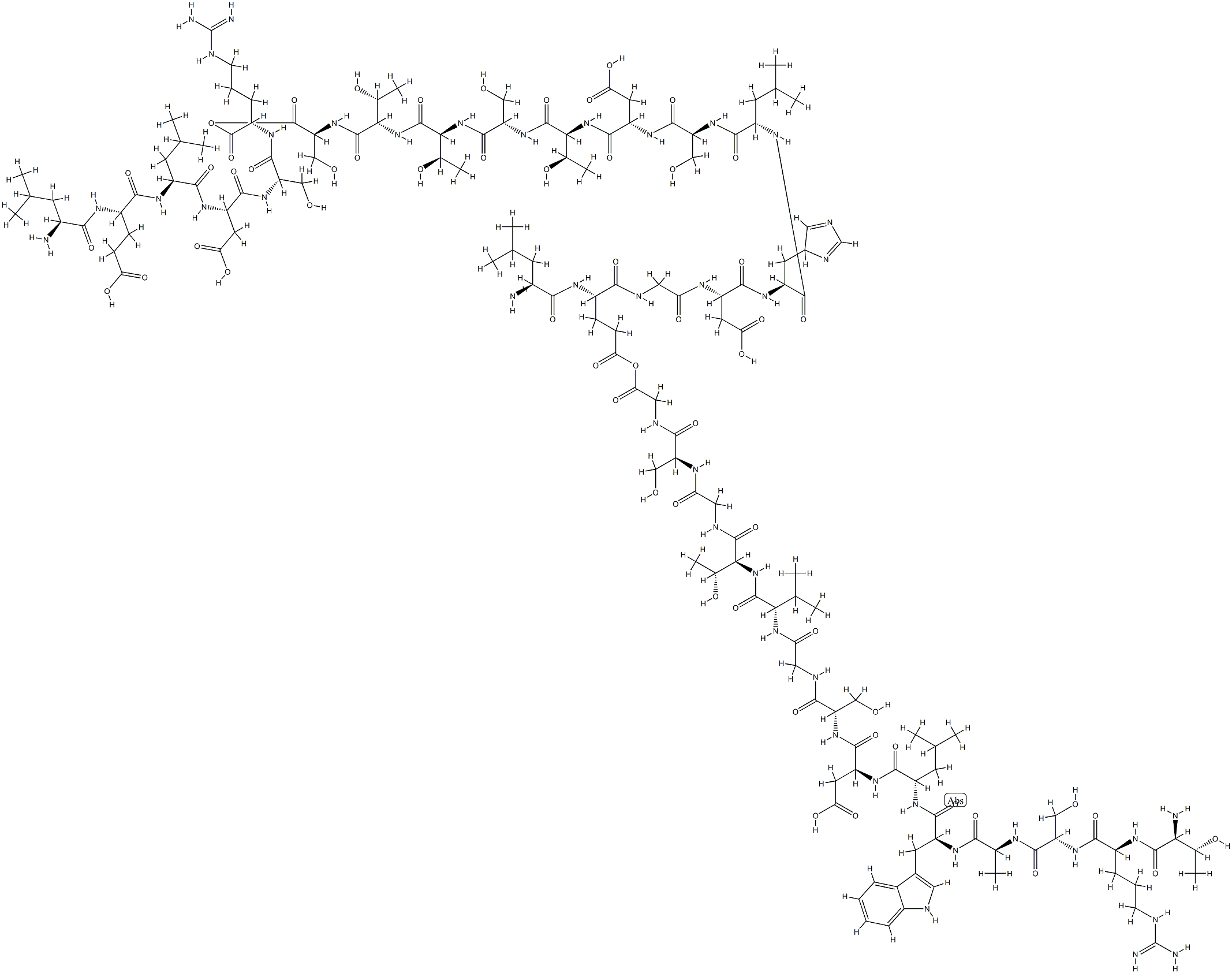
- 137348-10-8
- C142H228N42O58
- 3451.58
- All (0)
- China (0)
- (0)
Related Products More >

- 471-34-1
- CNY 50.0000
- 25kg
- 471-34-1
- Request For Quotation
- 1ton
- 471-34-1
- Request For Quotation
- 25kg
- 471-34-1
- Request For Quotation
- 1ton
- 471-34-1
- Request For Quotation
- 25kg
- 471-34-1
- Request For Quotation
- 1kg
- 471-34-1
- Request For Quotation
- 1ton
- 471-34-1
- Request For Quotation
- 25kg


The daily safe upper limit for adults is 2,500 mg (elemental calcium) from all sources. For those over 50, it drops to 2,000 mg due to reduced absorption efficiency.
Overdosing risks include hypercalcemia (high blood calcium), causing nausea, kidney stones, or impaired kidney function. It may also interfere with absorption of other minerals like iron or zinc.
To avoid excess, follow recommended intakes, check labels for elemental calcium content, and avoid combining supplements with high-calcium foods. Consult a doctor before exceeding guidelines, especially with kidney issues.
Exceeding this limit can lead to health problems such as kidney stones, constipation, and impaired absorption of other essential minerals like iron and zinc. In severe cases, it may cause hypercalcemia—a condition where calcium levels in the blood become too high—leading to nausea, confusion, and even kidney damage.
Calcium carbonate is commonly used in dietary supplements and antacids (like Tums), making it easy to unknowingly exceed safe levels, especially when combining multiple sources. For example, someone taking calcium supplements while also using antacid tablets frequently may exceed the recommended daily intake.
It's important to note that individual needs vary. Postmenopausal women and older adults may require more calcium for bone health, but they should still stay within safe limits. Always consult a healthcare provider before starting high-dose supplementation.
Understanding safe intake levels is essential for using calcium carbonate safely in health and medical applications. Keywords: calcium carbonate, excessive intake, upper limit, hypercalcemia, kidney stones, dietary supplements, antacids, elemental calcium, health risks, recommended intake.
1. Daily Safe Limits of Calcium Carbonate
•
Adults (19-50 years):
•
Recommended Daily Allowance (RDA): 1,000 mg elemental calcium (~2,500 mg calcium carbonate)
•
Upper Tolerable Limit (UL): 2,500 mg elemental calcium (~6,250 mg calcium carbonate)
•
Adults >51 years:
•
RDA: 1,200 mg elemental calcium (~3,000 mg calcium carbonate)
•
UL: 2,000 mg elemental calcium (~5,000 mg calcium carbonate)
Key Note:
•
Calcium carbonate is 40% elemental calcium (e.g., 500 mg tablet = 200 mg absorbable calcium).
•
Exceeding UL for prolonged periods increases health risks.
2. Health Risks of Calcium Carbonate Overdose
A. Hypercalcemia (High Blood Calcium)
•
Symptoms: Fatigue, nausea, confusion, kidney stones
•
Severe cases: Cardiac arrhythmias, vascular calcification
B. Kidney Damage
•
Excess calcium strains kidneys → risk of nephrocalcinosis (calcium deposits in kidneys)
•
Worse for those with existing kidney disease
C. Impaired Mineral Absorption
•
Iron & Zinc Deficiency: High calcium blocks absorption of these critical minerals.
•
Magnesium Depletion: Disrupts muscle/nerve function.
D. Digestive Issues
•
Constipation (common with calcium carbonate supplements)
•
Acid rebound (if taken without food)
3. How to Avoid Calcium Carbonate Overdose
A. Track Total Calcium Intake
•
Food Sources: Dairy, leafy greens, fortified foods (e.g., 1 cup milk = ~300 mg calcium).
•
Supplements: Check labels for elemental calcium content, not just carbonate weight.
B. Split Doses
•
Take ≤500 mg elemental calcium (1,250 mg carbonate) per dose for better absorption.
C. Avoid Unnecessary Supplementation
•
At-risk groups: Postmenopausal women, osteoporosis patients should consult doctors before high-dose use.
•
Medication interactions: Calcium can interfere with antibiotics (e.g., tetracyclines) and thyroid meds.
D. Choose Alternative Forms
•
Citrate/malate forms are gentler on digestion and better absorbed than carbonate.