


 Home
Home
Many people wonder what amino acids make up collagen and why those specific building blocks are important. How do these amino acids help collagen do its job in our skin, bones, and joints? Are some amino acids more common in collagen than others? What role do they play in keeping our bodies healthy and strong? How does knowing this help us understand collagen supplements better?
What Amino Acids Are in Collagen and Why Do They Matter?
Related Encyclopedia
- 9007-34-5
- 0
- All (14)
- China (1)
- (14)
- 9064-67-9
- C4H6N2O3R2.(C7H9N2O2R)n
- 0
- All (14)
- China (1)
- (14)
- 92113-31-0
- CO(NH2)2,Fe+++
- 0
- All (3)
- China (0)
- (3)

- 115044-69-4
- C103H185N31O24S
- 2273.83
- All (0)
- China (0)
- (0)
- 51-35-4
- C5H9NO3
- 131.13
- All (84)
- China (23)
- (84)
- 41672-81-5
- C37H69NO5
- 607.95
- All (1)
- China (0)
- (1)
- 147028-80-6
- C5H9NO3
- 131.13000
- All (84)
- China (23)
- (84)
- 29795-82-2
- C5H9NO2
- 115.13000
- All (19)
- China (0)
- (19)
- 617-41-4
- C4H5ClO4
- 152.53300
- All (0)
- China (0)
- (0)
- 90698-81-0
- 0
- All (0)
- China (0)
- (0)
Related Products More >

- 147-85-5
- CNY Request For Quotation
- 147-85-4
- CNY Request For Quotation
- 147-85-3
- CNY Request For Quotation
- 9010-10-2
- CNY Request For Quotation
- 9010-10-1
- CNY Request For Quotation
- 9010-10-0
- CNY Request For Quotation
- CNY Request For Quotation
- CNY Request For Quotation


Other amino acids like alanine and arginine are also part of collagen but in smaller amounts. When you take collagen supplements, you’re basically giving your body these key amino acids, so it can build and repair tissues more easily. So, understanding which amino acids are in collagen helps explain why it’s so important for keeping us healthy and looking good over time.
In addition to these dominant amino acids, alanine, arginine, and glutamine are present in smaller quantities and contribute to the overall properties of collagen. The repetitive Gly-Pro-X or Gly-X-Hyp sequences, where X can be any amino acid but is frequently proline or hydroxyproline, are characteristic motifs that define collagen’s molecular architecture. These sequences facilitate the formation of stable fibrils that provide tensile strength to connective tissues such as skin, bone, cartilage, and tendons.
Practically, the amino acid composition of collagen underpins its function in tissue repair and regeneration. For instance, dietary collagen peptides supply these amino acids to the body, supporting fibroblast activity and extracellular matrix synthesis. This molecular understanding also guides the development of biomaterials and therapeutics that mimic collagen’s properties for medical applications, including wound healing and tissue engineering. Thus, the specific amino acid profile is fundamental to collagen’s biological roles and its efficacy in clinical and cosmetic uses.
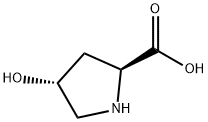
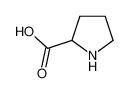
Proline introduces rigidity into the polypeptide backbone due to its cyclic structure, which restricts rotation and helps maintain the helix’s extended shape. Hydroxyproline, a post-translationally modified version of proline, forms hydrogen bonds that stabilize the triple helix, particularly under physiological temperatures. This modification is catalyzed by the enzyme prolyl-4-hydroxylase, which requires vitamin C as a cofactor—a deficiency of which leads to scurvy, characterized by fragile connective tissues due to impaired collagen synthesis. Additionally, collagen contains smaller amounts of lysine, alanine, and arginine, which contribute to cross-linking between collagen fibers, enhancing tissue resilience.
In daily life, collagen’s amino acid profile explains its role in skincare and joint health products. Glycine and proline support skin elasticity and hydration, while hydroxyproline aids in wound healing by reinforcing the extracellular matrix. Industrially, collagen is extracted from animal byproducts like bones and hides, with its amino acid composition dictating its solubility and gel strength—properties exploited in food additives, cosmetic films, and biomedical scaffolds. Medically, collagen-derived peptides are used to treat osteoarthritis, as their amino acids stimulate cartilage regeneration. From a biochemical perspective, collagen’s amino acid sequence exemplifies how protein structure dictates function, bridging molecular biology with tissue engineering. Its study also informs synthetic biology efforts to design bioinspired materials, highlighting the intersection of chemistry, physics, and medicine in addressing age-related tissue degeneration and chronic injuries.
Other notable amino acids include alanine, glutamic acid, and arginine, though in smaller proportions. Lysine, present in lower amounts (around 3–5%), undergoes hydroxylation to hydroxylysine, which facilitates cross-linking between collagen fibers—processes that strengthen tissues like tendons and cartilage by creating covalent bonds between adjacent molecules. This cross-linking, dependent on lysine and hydroxylysine, distinguishes collagen’s mechanical properties from other structural proteins like elastin, which lacks such extensive cross-linking and prioritizes elasticity over tensile strength.
A key distinction lies in collagen’s relative scarcity of essential amino acids—those the body cannot synthesize. Unlike proteins such as whey, which are rich in essential amino acids like leucine, collagen is low in tryptophan and contains limited amounts of isoleucine, leucine, and valine. This makes it an incomplete protein for muscle protein synthesis, though its unique amino acids serve specialized roles in connective tissue health.
A common misconception is that collagen’s amino acid profile alone suffices for overall protein needs. While its glycine, proline, and hydroxyproline support collagen synthesis, they do not replace the need for essential amino acids from other sources. Another misunderstanding is equating hydroxyproline to a dietary requirement; the body produces it from proline using vitamin C as a cofactor, so dietary hydroxyproline is not essential, though proline intake supports its formation.
Understanding this composition clarifies collagen’s biological role: its amino acids are tailored to form strong, stable structures, making it indispensable for skin elasticity, joint integrity, and bone strength. Their specific interactions—glycine’s packing, proline’s rigidity, hydroxyproline’s bonding—highlight how molecular design directly enables tissue function, a principle central to fields like physiology and materials science.