


 Home
Home
Hi, I'd like to ask—when silver nitrate solution is mixed with potassium iodide, does a visible precipitate form? What's the chemical formula of the precipitate, and what color is it? How can we verify this precipitation reaction in a lab setting? Are there practical applications of this reaction in analytical chemistry or industry? Thanks!
Do Silver Nitrate and Potassium Iodide Create a Precipitate When Mixed?
Related Encyclopedia
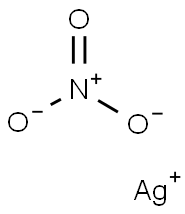
- 7761-88-8
- AgNO3
- 169.87
- All (2)
- China (2)
- (2)
- 14614-74-5
- AgNO3
- 171.91100
- All (2)
- China (2)
- (2)
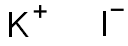
- 7681-11-0
- KI
- 166
- All (151)
- China (31)
- (151)
- 13823-30-8
- IK
- 170.00400
- All (0)
- China (0)
- (0)
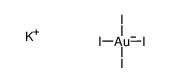
- 7791-29-9
- AuH4I4KO2
- 779.71000
- All (0)
- China (0)
- (0)

- 41944-01-8
- BiI7K4
- 1253.7
- All (1)
- China (0)
- (1)
- 136371-38-5
- C4H6Ag2N8O6
- 477.87700
- All (0)
- China (0)
- (0)
- 136371-39-6
- C18H12Ag2N6O6
- 624.06100
- All (0)
- China (0)
- (0)
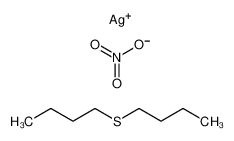
- 36354-61-7
- C8H18AgNO3S
- 316.16700
- All (0)
- China (0)
- (0)
- 54955-91-8
- C11H15AgN2O3S3
- 427.31200
- All (0)
- China (0)
- (0)
Related Products More >

- 7681-11-0
- USD 1.0000
- 1kg
- 7761-88-8
- Request For Quotation
- 10g
- 7761-88-8
- Request For Quotation
- 100g
- 7761-88-8
- Request For Quotation
- 500g
- 7761-88-8
- Request For Quotation
- 1kg
- 7681-11-0
- Request For Quotation
- 25kg/Cardboard Drum
- 7681-11-0
- Request For Quotation
- 25KG
- 7681-11-0
- Request For Quotation
- 25kg Bag


The chemical formula of the precipitate is AgI, and its yellow color is a key characteristic that helps identify the reaction. In a laboratory setting, this precipitation can be verified by slowly adding a potassium iodide solution to a silver nitrate solution while stirring gently. The immediate appearance of a yellow precipitate serves as a clear indication that the reaction has taken place. To further confirm the identity of the precipitate, scientists can filter the mixture to isolate the solid and then analyze its properties, such as its solubility in various solvents or its structural composition through techniques like X-ray diffraction.
This precipitation reaction has practical applications in different fields. In analytical chemistry, it is used to detect the presence of iodide ions in a sample during qualitative analysis. It also plays a role in quantitative analysis through precipitation titration, where the amount of silver iodide formed is used to determine the concentration of iodide ions. Industrially, silver iodide has been used in cloud seeding to induce rainfall, as its crystal structure can act as a nucleus for water droplets. Additionally, this reaction is a fundamental example in chemistry education, demonstrating the principles of precipitation reactions and ionic bonding.
In a laboratory setting, verifying this precipitation reaction involves several straightforward steps. First, the formation of a pale yellow precipitate is a clear visual indication of the reaction. To confirm the identity of the precipitate, one can perform a qualitative analysis. For instance, adding a small amount of thiosulfate solution to the precipitate will dissolve it, as silver iodide reacts with thiosulfate to form a soluble complex. This dissolution confirms the presence of silver iodide. Additionally, the precipitate can be filtered, washed, and dried. Its mass can then be determined, and the yield of the reaction can be calculated based on stoichiometry.
This reaction has practical applications in both analytical chemistry and industry. In qualitative analysis, the formation of silver iodide precipitate is used to detect the presence of silver ions in a solution. The distinct color and low solubility of silver iodide make it an effective reagent for identifying silver ions among other cations. In industrial applications, silver iodide is used in the production of photographic materials due to its sensitivity to light. It is also employed in the synthesis of other silver compounds, particularly in processes where high purity silver compounds are required.
Moreover, the reaction between silver nitrate and potassium iodide serves as an excellent teaching tool in chemistry education. It demonstrates the principles of precipitation reactions, solubility rules, and stoichiometry. Students can observe the formation of a solid product from two clear solutions, reinforcing their understanding of chemical reactions and the behavior of ionic compounds in aqueous environments. This simple yet informative reaction highlights the practical importance of chemistry in everyday applications and industrial processes.
In lab setups, you can verify this by adding a few drops of potassium iodide to silver nitrate. The immediate yellow precipitate is a dead giveaway. Filtering the mixture lets you isolate AgI, and drying it reveals its powdery texture. Sometimes, under a microscope, you might spot its hexagonal crystals, which is a neat visual confirmation.
This reaction matters in analytical chemistry for quantifying iodide ions. It’s used in precipitation titrations, where the amount of silver nitrate needed to form AgI helps calculate iodide concentrations. Industrially, AgI once played a role in photography due to its light sensitivity, and today, it’s used in cloud seeding—its crystal structure mimics ice, encouraging raindrop formation. The predictable precipitation makes it a useful tool in both research and practical applications.
In laboratory settings, verifying this precipitation reaction involves several straightforward steps. First, equal volumes of silver nitrate and potassium iodide solutions are prepared, typically in dilute aqueous solutions. When these solutions are mixed, the appearance of the bright yellow precipitate confirms the reaction. To further validate the presence of silver iodide, a simple solubility test can be performed. Adding dilute ammonia solution to the mixture will not dissolve the precipitate, distinguishing it from other silver halides like silver chloride, which does dissolve in ammonia. This characteristic behavior helps confirm the identity of the precipitate as silver iodide.
The practical applications of this reaction extend into several important fields. In analytical chemistry, the silver nitrate-potassium iodide reaction serves as a standard qualitative test for detecting iodide ions in solution. The distinct color change provides a quick and reliable method for identifying halide ions during qualitative analysis. This test is particularly valuable in educational laboratories for teaching precipitation reactions and ionic compound identification.
Beyond the classroom, silver iodide finds significant industrial applications. One of the most notable uses is in cloud seeding operations, where silver iodide acts as a nucleating agent to promote the formation of ice crystals in clouds, potentially enhancing precipitation. This application takes advantage of silver iodide's crystal structure, which closely resembles ice, making it an effective agent for weather modification. Additionally, silver iodide has been historically used in photographic emulsions due to its light-sensitive properties, although this application has diminished with the advent of digital photography.
The reaction also demonstrates important principles in solution chemistry, particularly solubility rules and ionic interactions. Silver iodide's low solubility product constant (Ksp) ensures that even trace amounts of iodide ions can be detected through precipitation, making the reaction sensitive and reliable for analytical purposes. This characteristic is exploited in various detection methods where precise measurement of iodide concentrations is required.