


 Home
Home
Hi, I'd like to ask—Is barium sulfate (BaSO4) soluble in water? What chemical factors prevent it from dissolving easily? Why is BaSO4 used as a contrast agent in X-rays despite low solubility? Does temperature affect its solubility? Are there safety considerations when using BaSO4 in medical procedures? Thanks!
Is BaSO4 Soluble? Exploring Its Water Solubility and Medical Applications
Related Encyclopedia
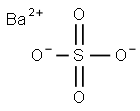
- 7727-43-7
- BaO4S
- 233.39
- All (261)
- China (18)
- (261)
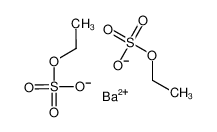
- 6509-22-4
- C4H10BaO8S2
- 387.57400
- All (0)
- China (0)
- (0)
- 130277-73-5
- C43H58BaO13S2
- 984.37000
- All (0)
- China (0)
- (0)
Related Products More >

- 13462-86-7
- Request For Quotation
- 100kg
- 13462-86-7
- Request For Quotation
- 1kg
- 13462-86-7
- Request For Quotation
- 1ton
- 13462-86-7
- Request For Quotation
- 25kg
- 13462-86-7
- Request For Quotation
- 25kg
- 13462-86-7
- Request For Quotation
- 1ton
- 13462-86-7
- Request For Quotation
- 25kg
- 13462-86-7
- Request For Quotation
- 1ton


Despite this, BaSO4 is used as an X-ray contrast agent because its high atomic number (barium has an atomic number of 56) makes it highly effective at absorbing X-rays, creating clear images of the gastrointestinal tract. Its low solubility is crucial here—since it doesn’t dissolve in bodily fluids, it doesn’t release toxic Ba²⁺ ions, which are known to cause muscle spasms, heart issues, and other health risks.
Temperature has a minor effect on BaSO4’s solubility: it increases slightly with higher temperatures, but the change is negligible for most practical purposes. In medical use, safety is paramount: only highly purified BaSO4 is used, and it must be administered carefully to avoid inhalation or intravascular injection. While BaSO4 itself is inert, any contamination with soluble barium salts could be dangerous, so quality control in its production is strict. This balance of low solubility, X-ray absorption, and chemical inertness makes it a valuable tool in diagnostic imaging.
The primary reason for BaSO₄’s low solubility lies in the balance between its lattice energy and the hydration energy of its ions. As an ionic compound, BaSO₄ consists of Ba²⁺ cations and SO₄²⁻ anions held together by strong ionic bonds. The lattice energy—the energy required to break the crystal structure— is exceptionally high due to the double charge on both ions, which creates a strong electrostatic attraction. When BaSO₄ is added to water, water molecules attempt to hydrate these ions, releasing hydration energy. However, the energy released during hydration is not sufficient to overcome the high lattice energy, so the compound remains largely undissolved. Additionally, the large size of both Ba²⁺ and SO₄²⁻ ions means they require more energy to be effectively surrounded by water molecules, further limiting dissolution. The ionic radius of Ba²⁺ (135 pm) and the tetrahedral structure of SO₄²⁻ create a stable lattice that resists disruption, making dissociation energetically unfavorable.
Despite its low solubility, BaSO₄ is widely used as a contrast agent in X-ray imaging, particularly for procedures like barium swallows, upper gastrointestinal series, and colonoscopies. Its utility stems from two key properties: its high atomic number and chemical inertness. Barium has an atomic number of 56, which makes it effective at absorbing X-rays due to its dense electron cloud. This absorption creates a stark contrast against the body’s soft tissues, allowing radiologists to visualize the gastrointestinal tract or other structures with exceptional clarity. Crucially, because BaSO₄ is so insoluble, it does not dissociate into Ba²⁺ ions in the body. Barium ions are toxic and can interfere with nerve and muscle function, but the compound’s low solubility ensures only trace amounts of Ba²⁺ are released, making it safe for medical use when administered properly. Furthermore, BaSO₄ is resistant to stomach acid (primarily hydrochloric acid), as it does not react to form soluble barium salts, which further enhances its safety profile.
Temperature has a limited effect on the solubility of BaSO₄. While the solubility of many salts increases with temperature, BaSO₄ shows a relatively slight increase. For example, at 100°C, its solubility rises to around 4.2×10⁻⁴ grams per 100 milliliters of water. This minor change is because the dissolution of BaSO₄ is endothermic, meaning it absorbs heat, but the energy required to overcome the lattice energy is not significantly reduced by typical temperature variations in biological systems or standard medical settings. The modest temperature dependence ensures that fluctuations in body temperature during procedures do not substantially alter its solubility or performance as a contrast agent, maintaining consistent diagnostic quality.
When using BaSO₄ in medical procedures, several safety considerations are essential. First, medical-grade BaSO₄ must be highly purified to eliminate impurities, especially soluble barium salts that could release toxic Ba²⁺ ions. Even trace amounts of soluble barium compounds can pose health risks, so strict quality control is necessary. Additionally, inhalation of BaSO₄ powder or improper administration (such as through the wrong route) can lead to pulmonary aspiration, causing lung irritation or obstruction. Healthcare providers must ensure the contrast agent is administered correctly and that patients are monitored for signs of aspiration. In rare cases, patients may experience allergic reactions to the contrast agent, though these are more likely due to additives in the formulation rather than BaSO₄ itself. Dehydration is another concern, as the insoluble BaSO₄ can form a thick, pasty consistency in the intestines if the patient is not adequately hydrated, potentially leading to bowel obstruction. To prevent this, patients are often advised to drink plenty of fluids after the procedure.
Several key factors contribute to BaSO4's remarkable insolubility. The compound's high lattice energy creates significant resistance to dissolution, while the hydration energies of its constituent ions fail to compensate adequately for this energy barrier. The large size of both Ba²⁺ and SO4²⁻ ions reduces their charge density, weakening their interaction with polar water molecules compared to smaller, more highly charged ions. This combination of strong lattice forces and weak solvation effects results in a compound that remains solid even in contact with water.
Despite its insolubility, BaSO4 serves as an effective X-ray contrast agent because it's opaque to X-rays while being biologically inert. When introduced into the body - typically by ingestion or enema - it coats internal structures like the gastrointestinal tract, creating clear visual contrasts on radiographic images. Medical preparations use ultra-fine BaSO4 particles suspended in a liquid carrier, ensuring even distribution without significant dissolution. The compound's insolubility prevents toxic barium ions from entering systemic circulation, making it safe for diagnostic procedures.
Temperature has minimal impact on BaSO4's solubility characteristics. While most salts show increased solubility with rising temperatures, BaSO4 exhibits negligible change - its solubility increases only slightly from about 0.0024 g/L at 25°C to 0.003 g/L at 100°C. This temperature independence makes it reliable for medical use across different environmental conditions.
Safety considerations focus on maintaining BaSO4's insoluble state during medical procedures. While the compound itself is non-toxic, soluble barium salts are highly poisonous. Medical-grade BaSO4 must meet stringent purity standards to prevent contamination with soluble barium compounds. Patients with potential gastrointestinal perforations avoid BaSO4 imaging because even minute amounts of soluble barium entering the peritoneal cavity could cause severe toxicity. Proper dosage control and administration protocols further ensure safety, making BaSO4 one of the safest contrast agents available when used correctly. The compound's insolubility also allows it to pass through the digestive tract without absorption, with minimal risk of systemic effects.