


 Home
Home
Hi, I'd like to ask—Will polyethylene plastic burn? What is its ignition point? Does it release toxic gases when burning? How to safely dispose of polyethylene waste? How to fight a polyethylene fire? Thanks!
Is Polyethylene Flammable and What Is Its Safety During Combustion?
Related Encyclopedia
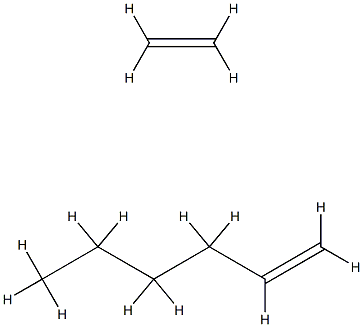
- 25213-02-9
- C8H16
- 112.21264
- All (24)
- China (2)
- (24)
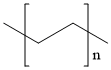
- 9002-88-4
- (C2H4)n
- 28.05316
- All (24)
- China (2)
- (24)
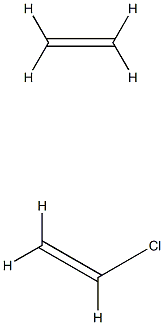
- 63231-66-3
- C4H7Cl
- 90.55138
- All (3)
- China (3)
- (3)
- 68131-73-7
- C12H5N7O12
- 0
- All (2)
- China (0)
- (2)
- 68441-17-8
- C51H102O21Si2
- 0
- All (29)
- China (28)
- (29)
- 64754-90-1
- 0
- All (3)
- China (3)
- (3)
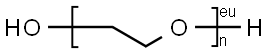
- 25322-68-3
- (C2H4O)nH2O
- 0
- All (65)
- China (33)
- (65)
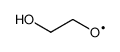
- 28287-76-5
- C2H5O2
- 61.05990
- All (65)
- China (33)
- (65)
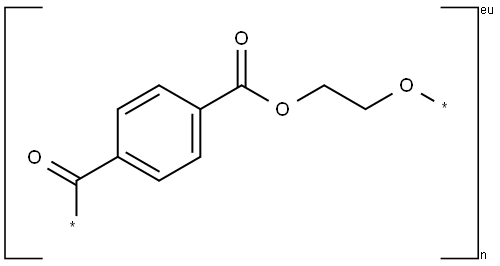
- 25038-59-9
- C10H12O6
- 228.19868
- All (3)
- China (0)
- (3)

- 1192130-70-3
- C20H40O4
- 344.52900
- All (0)
- China (0)
- (0)
Related Products More >

- 63231-66-3
- CNY Request For Quotation
- 9002-88-4
- Request For Quotation
- 25322-68-3
- Request For Quotation
- USD 20.0000
- 25kg
- USD 15.0000
- 25kg
- 9004-96-0
- Request For Quotation
- 50


When polyethylene burns, the byproducts depend on combustion completeness. Complete burning produces carbon dioxide and water vapor, but incomplete combustion releases toxic carbon monoxide. Additionally, if the plastic contains additives like pigments, flame retardants, or stabilizers, these can generate harmful compounds such as dioxins or volatile organic compounds (VOCs). The toxicity of the fumes thus hinges on factors like burning temperature and additive composition.
Safe disposal of polyethylene waste prioritizes recycling, as the material is highly recyclable and can be processed into new plastic products, such as bottles, containers, or lumber. Open-air burning should be avoided to prevent the release of toxic fumes, and landfilling is a last resort due to its slow degradation rate. Always follow local recycling guidelines to ensure proper handling and minimize environmental impact.
In the event of a polyethylene fire, use dry chemical (ABC class) or carbon dioxide (CO2) fire extinguishers to smother the flames, as water may disperse burning plastic and exacerbate the fire. Ensure adequate ventilation to dissipate toxic fumes, and evacuate the area if smoke becomes overwhelming. Preventive measures, such as storing polyethylene away from heat sources and implementing strict fire safety protocols, are crucial to mitigating risks associated with its flammability.
When polyethylene burns, it primarily releases carbon dioxide and carbon monoxide. These gases are the main combustion products, with carbon monoxide being particularly hazardous due to its toxicity. Unlike some chlorinated plastics, polyethylene does not release corrosive gases such as hydrochloric acid, which is a notable advantage in terms of combustion safety. However, the presence of carbon monoxide means that any burning of polyethylene should be managed carefully to avoid inhalation risks.
The disposal of polyethylene waste is a significant environmental and safety concern. Polyethylene is recyclable, and recycling is the most sustainable and preferred method of disposal. When recycling is not possible, incineration in controlled facilities with proper pollution control measures is an acceptable alternative. Open burning of polyethylene is strongly discouraged due to the potential release of toxic gases and particulates that can harm air quality and human health.
In the event of a polyethylene fire, effective firefighting strategies are essential. Water and foam are commonly used to extinguish polyethylene fires, as they help cool the material and reduce flame spread. Carbon dioxide and dry chemical extinguishers are also effective, as they can smother the fire by depriving it of oxygen. Firefighters should always use appropriate protective equipment, including breathing apparatus, to protect against inhalation of toxic gases.
Understanding the flammability, combustion products, and proper disposal methods of polyethylene is crucial for both industrial users and consumers. This knowledge helps mitigate fire risks, protect human health, and minimize environmental impact.
When burning, PE mainly gives off carbon dioxide and water vapor, but incomplete burning releases carbon monoxide, a toxic gas. Unlike PVC, it doesn’t produce dioxins, but the smoke is still irritating. Inhaling large amounts is harmful, so safety matters.
For disposal, recycling is best. PE is highly recyclable—look for codes #2 (HDPE) or #4 (LDPE). Rinse and dry items before recycling to avoid contamination. Never burn or litter PE, as it pollutes the environment.
To fight a PE fire, use ABC dry chemical or CO2 extinguishers. Water isn’t effective and can spread flames. If the fire is big, evacuate and call emergency services. Always wear respiratory gear if possible, since the smoke is hazardous.
When burning, polyethylene releases a complex mixture of toxic gases that pose significant health hazards. The primary combustion byproducts include carbon monoxide (CO), carbon dioxide (CO2), and water vapor. More dangerous emissions include formaldehyde, acetaldehyde, and various volatile organic compounds (VOCs). Under oxygen-deprived conditions or higher temperatures, polyethylene combustion can produce even more hazardous substances such as benzene, toluene, polycyclic aromatic hydrocarbons (PAHs), and potentially dioxins. These toxic fumes contribute to acute respiratory distress, eye and throat irritation, and long-term health risks including potential carcinogenic effects with sufficient exposure. The dense smoke produced during polyethylene fires significantly reduces visibility and contains particulate matter that can penetrate deep into lung tissue.
Proper disposal methods for polyethylene waste focus on minimizing environmental contamination and health risks. Recycling remains the most environmentally responsible option, with many communities accepting clean polyethylene items through curbside programs or dedicated drop-off centers. The recycling process typically involves sorting, cleaning, shredding, and melting the plastic into pellets for manufacturing new products. For non-recyclable polyethylene waste, energy recovery through controlled incineration in facilities equipped with advanced emission control systems provides an alternative to landfilling. Modern waste-to-energy plants can convert polyethylene's high calorific value into electricity while capturing most pollutants. Landfill disposal should be minimized as polyethylene persists for centuries without significant degradation, contributing to microplastic pollution and occupying valuable space. Some innovative approaches include chemical recycling methods that break down polyethylene into its original monomers for creating new plastics or other chemical products.
Fighting polyethylene fires requires specific techniques due to the material's combustion characteristics and toxic smoke production. Water remains the primary extinguishing agent for small fires, though large quantities are often needed due to polyethylene's high heat content and melting behavior. The molten plastic can flow significant distances before re-igniting, requiring extended firefighting efforts. For larger fires or when water isn't available, dry chemical extinguishers (Class BC or ABC) effectively smother the flames by interrupting the chemical reaction. Foam extinguishers work particularly well for liquid polyethylene products or when the fire has spread to multiple surfaces by creating a barrier between fuel and oxygen. Carbon dioxide extinguishers may be suitable for electrical fires involving polyethylene components.