


 Home
Home
Hello, please explain what specific property makes it suitable for antifreeze production, why it's different from being just antifreeze, what are the key differences between propylene glycol and ethylene glycol antifreeze, and in what specific scenarios is propylene glycol antifreeze most appropriate to use?
Is Propylene Glycol an Antifreeze? The Truth About This Safer Coolant Alternative
Related Encyclopedia
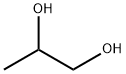
- 57-55-6
- C3H8O2
- 76.09
- All (326)
- China (55)
- (326)
- 9038-95-3
- C9H20O3
- 176.26
- All (1)
- China (0)
- (1)
- 64386-68-1
- C19H28O7
- 368.42100
- All (0)
- China (0)
- (0)
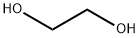
- 107-21-1
- C2H6O2
- 62.07
- All (551)
- China (111)
- (551)
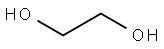
- 15054-86-1
- C2H6O2
- 62.07
- All (551)
- China (111)
- (551)
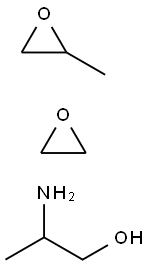
- 65605-36-9
- C8H19NO3
- 177.24
- All (0)
- China (0)
- (0)
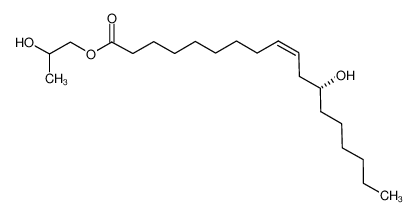
- 26402-31-3
- C21H40O4
- 356.54000
- All (0)
- China (0)
- (0)
- 118624-10-5
- C9H18O7
- 238.23500
- All (0)
- China (0)
- (0)

- 53824-77-4
- C23H44O4
- 384.59300
- All (0)
- China (0)
- (0)
- 112071-94-0
- C9H16O5
- 204.22000
- All (0)
- China (0)
- (0)
Related Products More >

- CNY Request For Quotation
- CNY Request For Quotation
- CNY Request For Quotation
- 110-98-5
- CNY Request For Quotation
- 110-98-5
- CNY Request For Quotation
- 25322-69-4
- Request For Quotation
- 25322-69-4
- Request For Quotation
- 143-24-8
- Request For Quotation


Compared to ethylene glycol antifreeze, propylene glycol has key differences. Ethylene glycol is more toxic (LD50 ~4,700 mg/kg in rats) and cheaper, while propylene glycol is low-toxic (LD50 ~20,000 mg/kg in rats) and safer for humans and pets. Ethylene glycol also has better heat transfer efficiency but poses higher environmental risks if leaked.
Propylene glycol antifreeze suits scenarios prioritizing safety: residential heating systems, food processing equipment, and vehicles in areas with strict environmental regulations. It is also preferred in marine applications to avoid harming aquatic life.
Why Propylene Glycol Works as Antifreeze
PG shares key antifreeze properties with ethylene glycol:
Freeze Point Depression:
50% PG/water mix protects to -34°C (vs. EG’s -37°C)
Boiling Point Elevation:
50% PG/water boils at 108°C (vs. EG’s 110°C)
Heat Transfer Efficiency:
PG has 85% of EG’s thermal conductivity
However, PG’s higher viscosity and lower toxicity make it suitable for specialized applications.
PG vs. EG Antifreeze: Key Differences
Property
Propylene Glycol (PG)
Ethylene Glycol (EG)
Toxicity
Low (LD50: 20 g/kg)
High (LD50: 1.4 g/kg)
Freeze Protection
-34°C (50% solution)
-37°C (50% solution)
Viscosity
56 cP at 20°C
16 cP at 20°C
Cost
2-3× more expensive
Budget-friendly
Biodegradability
80% in 28 days
60% in 28 days
Where Propylene Glycol Antifreeze Excels
Food Processing Facilities
FDA-approved for accidental contact with food products
Used in brewery chillers, dairy cooling systems
Marine & RV Applications
Non-toxic if leaked into water supplies
Required in national parks and eco-sensitive areas
Pet-Friendly Automotive Use
Safer for households with dogs/cats (bitterants often added)
Solar Water Heating
High flash point (99°C) reduces fire risk vs. EG
Aircraft Deicing
Less corrosive to aluminum components than EG blends
The reason for using propylene glycol instead of or alongside ethylene glycol lies primarily in its safety profile. Propylene glycol is significantly less toxic, making it safer for use in environments where there might be incidental contact with humans, pets, or wildlife. This makes it particularly suitable for use in food-processing facilities, areas frequented by animals, or any situation where accidental ingestion could occur.
In practical applications, propylene glycol is widely utilized in antifreeze for automotive cooling systems, HVAC systems, and even in recreational vehicles like boats and motorhomes where it may come into contact with potable water systems. Its non-toxic nature also makes it preferable for winterizing pipes in homes and businesses to prevent them from freezing and bursting during cold weather.
Another key application area includes heat transfer fluids in various industrial processes, where both efficiency and safety are crucial. Additionally, because of its stability and low toxicity, propylene glycol finds use in cosmetics, pharmaceuticals, and as a solvent in food flavorings.
Highlighting keywords such as safety, versatility, and efficiency underscores the importance of understanding propylene glycol's role not only as an effective antifreeze but also as a safer alternative in numerous applications where minimizing toxicity is essential. Proper handling and awareness of its properties can ensure safe and effective use across different industries.