


 Home
Home
Hello, please explain what factors in its structure contribute to low toxicity, why the LD50 value indicates its relatively safe nature, what are the specific toxicity data for different exposure routes, and how to ensure its safety for infants and what precautionary measures should be taken?
Is Propylene Glycol Toxic? The Surprising Truth About This Common Chemical’s Safety
Related Encyclopedia
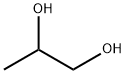
- 57-55-6
- C3H8O2
- 76.09
- All (326)
- China (55)
- (326)
- 26402-31-3
- C21H40O4
- 356.54000
- All (0)
- China (0)
- (0)
- 118624-10-5
- C9H18O7
- 238.23500
- All (0)
- China (0)
- (0)

- 53824-77-4
- C23H44O4
- 384.59300
- All (0)
- China (0)
- (0)
- 112071-94-0
- C9H16O5
- 204.22000
- All (0)
- China (0)
- (0)
- 31565-12-5
- C11H22O3
- 202.29058
- All (0)
- China (0)
- (0)

- 41395-83-9
- C21H40O4
- 356.54000
- All (0)
- China (0)
- (0)
- 25791-96-2
- HO(C3H6O)nCH[CH2(OC3H6)nOH]2
- 0
- All (4)
- China (2)
- (4)
- 64217-62-5
- C21H26N6O7S2
- 538.60000
- All (1)
- China (1)
- (1)

- 105-62-4
- C39H72O4
- 604.99
- All (1)
- China (0)
- (1)
Related Products More >

- CNY Request For Quotation
- CNY Request For Quotation
- CNY Request For Quotation
- 110-98-5
- CNY Request For Quotation
- 110-98-5
- CNY Request For Quotation
- 25322-69-4
- Request For Quotation
- 25322-69-4
- Request For Quotation
- 24800-44-0
- CNY 10.0000
- 25kg


Toxicity data shows its LD50 (lethal dose for 50% of test subjects) is relatively high: 20,000 mg/kg in rats (oral) and 3,200 mg/kg in mice (intraperitoneal). This indicates low acute toxicity compared to highly toxic substances.
For infants, caution is advised. Infants have immature metabolic systems, especially those with underdeveloped kidneys or liver. Even normal doses may pose risks like electrolyte imbalances or metabolic acidosis. Regulatory bodies like the EU restrict its use in baby cosmetics and food to lower levels than in adult products.
Why Is PG Considered Low-Toxicity?
Favorable Metabolic Pathway:
Converts to lactic acid → pyruvate (normal energy cycle)
45% excreted unchanged in urine within 12 hours
High LD50 Values:
Oral (rats): 20,000 mg/kg (vs. ethylene glycol’s 4,700 mg/kg)
Dermal (rabbits): >20,000 mg/kg
Inhalation (rats): >12,000 mg/m³
Regulatory Approvals:
FDA: GRAS (Generally Recognized As Safe) for foods/drugs
WHO: Acceptable Daily Intake (ADI) = 25 mg/kg/day
Toxicity Data at a Glance
Exposure Route
Toxicity Threshold
Equivalent for 70kg Adult
Oral
NOAEL*: 500 mg/kg/day
35 grams daily (≈23 tbsp of PG)
IV
Safe limit: 71 g/day (medical)
Hospital use only
Inhalation
TWA** 10 mg/m³ (occupational)
8-hour workday exposure limit
*NOAEL: No Observed Adverse Effect Level
**TWA: Time-Weighted Average
Is PG Safe for Infants? Pediatric Considerations
Approved Uses:
FDA permits PG in infant medications (e.g., vitamin drops) at ≤0.5%
EU allows ≤1% in diaper creams (unless labeled "PG-free")
Potential Risks:
Premature infants: Impaired kidney function may slow PG clearance
Eczema patients: 2-3% show contact dermatitis
Safety Protocols:
NICU guidelines: Limit IV PG to <3 g/kg/day
Topical products: Avoid on broken skin
When PG Becomes Hazardous
Extreme Overdose:
6 g/kg causes osmotic imbalance (rare outside medical errors)
Inhalation Abuse:
Vaping >500 mg/day may cause respiratory irritation
Allergic Reactions:
Patch test positivity: 0.8-3.5% (higher in atopic dermatitis)
Despite its low toxicity, excessive amounts can still cause health issues in sensitive individuals or under certain conditions. For example, prolonged exposure or ingestion of large quantities might lead to symptoms such as central nervous system depression, renal failure, and lactic acidosis. However, these cases are rare and typically associated with unusual exposures or pre-existing health conditions.
In daily life, propylene glycol has numerous applications thanks to its properties. In the food industry, it serves as a solvent and preservative, often found in e-cigarettes and food flavorings. Its use in cosmetics and pharmaceuticals is widespread, acting as a moisturizer and carrier of active ingredients. Additionally, due to its lower toxicity compared to ethylene glycol, propylene glycol is frequently chosen for antifreeze and de-icing solutions where there's potential for contact with drinking water, animals, or humans.
Safety considerations remain important when using propylene glycol, particularly in ensuring it is handled and stored correctly to avoid accidental ingestion or excessive exposure. Highlighting keywords like low toxicity, metabolism, and safety measures emphasizes the importance of understanding both the benefits and potential risks associated with propylene glycol. This knowledge guides its responsible use across various industries.