


 Home
Home
Hi, I'd like to ask—Is barium hydroxide an alkali? How does its chemical structure determine alkalinity? What safety precautions apply to handling barium hydroxide? Thanks!
Is Barium Hydroxide an Alkali?
Related Encyclopedia

- 17194-00-2
- BaH2O2
- 171.34
- All (4)
- China (2)
- (4)
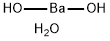
- 40226-30-0
- BaH4O3
- 189.36
- All (0)
- China (0)
- (0)
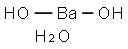
- 12230-71-6
- BaH4O3
- 189.36
- All (45)
- China (4)
- (45)
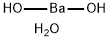
- 22326-55-2
- BaH4O3
- 189.36
- All (9)
- China (0)
- (9)

- 20665-52-5
- GaH2O2
- 103.73800
- All (0)
- China (0)
- (0)
- 8068-05-1
- C30H25ClN6
- 505.01
- All (0)
- China (0)
- (0)

- 14280-30-9
- HO
- 17.01000
- All (0)
- China (0)
- (0)

- 18933-05-6
- H2MnO2
- 88.95270
- All (0)
- China (0)
- (0)

- 62379-61-7
- CeLaNdPr
- 564.17000
- All (0)
- China (0)
- (0)
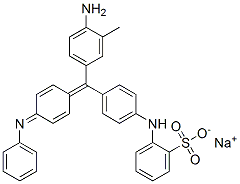
- 62152-67-4
- C38H31N4NaO3S
- 646.73
- All (0)
- China (0)
- (0)
Related Products More >

- 1310-73-2
- Request For Quotation
- 1310-73-2
- Request For Quotation
- 1310-73-2
- Request For Quotation
- 1310-73-2
- USD 1.0000
- 25kg
- 68037-01-4
- CNY 43.0000
- 850kg
- 68037-01-4
- CNY 43.0000
- 850kg
- 68037-01-4
- CNY 43.0000
- 850kg
- 68037-01-4
- CNY 43.0000
- 850kg


The alkalinity of barium hydroxide is directly linked to its ionic chemical structure. Barium hydroxide is an ionic compound composed of barium cations (Ba²⁺) and hydroxide anions (OH⁻).
The presence of OH⁻ ions in the solution increases the pH, making it basic (alkaline). The number of OH⁻ ions produced per formula unit—two in this case—contributes to the strength of its alkalinity. However, the solubility of Ba(OH)₂ in water is moderate compared to Group 1 hydroxides. For example, at 20°C, about 3.9 grams of Ba(OH)₂ can dissolve in 1 liter of water, producing a solution with a pH around 12–13, which is strongly alkaline but less concentrated than highly soluble alkalis like KOH or NaOH.
The Group 2 metal hydroxides, including barium hydroxide, generally exhibit increasing solubility down the group. Barium, being one of the heavier Group 2 elements, forms a hydroxide that is more soluble than those of lighter elements like magnesium (Mg(OH)₂, which is nearly insoluble) or calcium (Ca(OH)₂, which is sparingly soluble). This solubility allows barium hydroxide to release sufficient OH⁻ ions to demonstrate typical alkaline properties, such as turning red litmus paper blue, neutralizing acids, and reacting with amphoteric metals (e.g., aluminum) to produce hydrogen gas.
Handling barium hydroxide requires careful adherence to safety protocols due to its corrosive nature and the toxicity of barium ions. Here are the key safety considerations:
1. Toxicity of Barium Ions:
While barium hydroxide is an alkali, its toxicity stems from both its alkaline corrosiveness and the release of barium ions (Ba²⁺), which are toxic when ingested, inhaled, or absorbed through broken skin. Barium ions interfere with cellular function, particularly in the nervous system, heart, and gastrointestinal tract. Symptoms of barium poisoning may include nausea, vomiting, abdominal pain, muscle weakness, arrhythmias, and in severe cases, respiratory failure or cardiac arrest. Even though Ba(OH)₂ is less soluble than some barium salts, it still poses a risk, especially in solution where Ba²⁺ ions are readily available.
2. Corrosive Effects:
As an alkali, barium hydroxide solution is corrosive to skin, eyes, and mucous membranes. Direct contact can cause severe burns, irritation, or chemical conjunctivitis. Inhalation of dust or mist can irritate the respiratory tract, leading to coughing, shortness of breath, or lung damage.
3. Personal Protective Equipment (PPE):
Always wear appropriate PPE when handling barium hydroxide:Gloves: Use chemical-resistant gloves (e.g., nitrile or neoprene) to prevent skin contact.Eye Protection: Wear safety goggles or a face shield to protect against splashes or dust.Respiratory Protection: In environments with dust or fumes, use a particulate respirator or a chemical cartridge mask, especially if dealing with large quantities or powdered forms.Lab CoatApron: Wear a protective lab coat or apron to shield clothing from spills or splashes.
4. Handling and Storage:
Avoid Contamination: Keep barium hydroxide away from food, drinks, and personal items to prevent accidental ingestion.Ventilation: Work in a well-ventilated area or fume hood to minimize inhalation of dust or vapors.Spill Management: In case of a spill, neutralize small spills with a weak acid (e.g., acetic acid) before cleaning up. For larger spills, isolate the area, use absorbent materials, and follow institutional hazardous waste protocols.Storage: Store barium hydroxide in a tightly sealed container in a cool, dry place, away from incompatible substances (e.g., acids, oxidizing agents, and reactive metals). Label containers clearly with hazard warnings.
In summary, while barium hydroxide is an alkali with important chemical properties, its handling demands strict safety measures to prevent both corrosive injuries and barium ion toxicity. Always prioritize caution, proper PPE, and adherence to safety guidelines to minimize risks in laboratory, industrial, or educational settings.
Barium hydroxide (Ba(OH)₂) is classified as an inorganic compound and a strong base. It is composed of barium ions (Ba²⁺) and hydroxide ions (OH⁻). The hydroxide ion (OH⁻) is responsible for its alkaline properties. When barium hydroxide dissolves in water, it dissociates into barium ions and hydroxide ions, increasing the concentration of hydroxide ions in the solution. This increase in hydroxide ion concentration results in a high pH value, typically above 7, which is characteristic of alkaline substances.
1. Personal Protective Equipment (PPE):
Gloves: Wear chemical-resistant gloves to protect the skin from contact with barium hydroxide. The strong alkaline nature of the compound can cause severe chemical burns.Eye Protection: Use safety goggles or a face shield to protect the eyes from splashes or dust. Contact with the eyes can cause severe irritation or damage.Protective Clothing: Wear long-sleeved shirts, long pants, and closed-toe shoes to minimize skin exposure. An apron made of chemical-resistant material is also recommended.
2. Ventilation:
Ensure that the workspace is well-ventilated to avoid inhaling dust or fumes. Barium hydroxide can release irritating vapors, and prolonged inhalation may cause respiratory issues.
3. Storage:
Store barium hydroxide in airtight containers to prevent it from absorbing moisture from the air. It should be kept in a cool, dry place away from incompatible materials such as acids and oxidizing agents.
4. Spill Response:
In case of a spill, neutralize the barium hydroxide with a weak acid such as acetic acid or citric acid. Carefully sweep up the neutralized material and dispose of it according to local regulations. Avoid using water to clean up spills, as it can cause a strong exothermic reaction.
5. First Aid:
If barium hydroxide comes into contact with the skin, immediately rinse the affected area with plenty of water for at least 15 minutes. Seek medical attention if irritation persists.If it gets into the eyes, flush the eyes with water for at least 15 minutes and seek immediate medical attention.If ingested, do not induce vomiting. Drink water or milk to dilute the chemical and seek emergency medical care.
In summary, barium hydroxide is a strong alkali due to its ability to release hydroxide ions in solution. Its chemical structure, consisting of barium ions and hydroxide ions, determines its alkaline properties. When handling barium hydroxide, strict safety precautions must be followed to protect against chemical burns, inhalation hazards, and potential toxicity.
The alkalinity of barium hydroxide is determined by its chemical structure and the nature of its constituent ions. Barium hydroxide consists of barium ions (Ba²⁺) and hydroxide ions (OH⁻).
The presence of hydroxide ions (OH⁻) in the solution is what gives barium hydroxide its alkaline properties. These hydroxide ions increase the pH of the solution, making it basic. The strength of an alkali is related to the concentration of hydroxide ions it releases. Barium hydroxide is considered a strong base because it dissociates almost completely in water, releasing a significant amount of hydroxide ions.
What Safety Precautions Apply to Handling Barium Hydroxide?
Handling barium hydroxide requires careful attention to safety due to its strong alkaline nature and potential toxicity.
Inhalation of barium hydroxide dust can cause respiratory irritation and more severe health issues. Therefore, it is important to work in a well-ventilated area or use a fume hood when handling powdered forms of the compound. Respiratory protection, such as a dust mask or respirator, may be necessary in some cases.
Barium compounds are toxic, and ingestion of barium hydroxide can lead to serious health problems, including gastrointestinal distress, muscle weakness, and heart issues. Therefore, it is crucial to prevent ingestion and ensure proper hygiene practices, such as washing hands thoroughly after handling the compound.
Barium hydroxide should be stored in airtight containers to prevent moisture absorption and reaction with carbon dioxide in the air, which can form barium carbonate. It should also be kept away from incompatible materials, such as acids and strong oxidizing agents, to prevent hazardous reactions.
In case of a spill, the area should be isolated, and appropriate cleanup measures should be taken. Neutralizing the spill with an acid (such as dilute acetic acid) can help reduce the hazard, but care must be taken to avoid generating heat or gas. Any contaminated materials should be disposed of according to local regulations.
Barium hydroxide and its solutions should not be disposed of carelessly, as barium compounds can be toxic to aquatic life. Proper disposal methods, such as neutralization and containment, are essential to minimize environmental impact.
In laboratory and industrial settings, barium hydroxide is often used for specific applications, such as in the synthesis of other barium compounds or as a reagent in chemical reactions. Its strong alkaline properties make it useful for neutralizing acids and adjusting pH levels. However, its toxicity and corrosive nature require strict safety protocols to be followed.
Personnel handling barium hydroxide should receive proper training on its hazards and safe handling procedures. This includes understanding the risks associated with inhalation, ingestion, and skin contact, as well as knowing how to respond in case of an emergency.
Barium hydroxide is indeed an alkali, and its alkalinity is determined by its chemical structure, which releases hydroxide ions when dissolved in water. Handling this compound requires strict safety precautions due to its corrosive nature and toxicity. Proper training, use of personal protective equipment, and adherence to storage and disposal guidelines are essential to ensure safe handling and minimize risks. Understanding the properties and hazards of barium hydroxide is crucial for its effective and safe use in various applications.