


 Home
Home
The other day, someone at my lab asked, “Hey, is 4-isopropylphenol mildly acidic?” We were analyzing some phenolic compounds and comparing their properties, and this one came up. It's not the kind of question that pops up in daily conversation—but it’s an important one in chemistry and industry.
Is 4-Isopropylphenol Mildly Acidic?
Related Encyclopedia
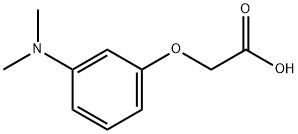
- 150188-64-0
- C10H13NO3
- 195.22
- All (0)
- China (0)
- (0)
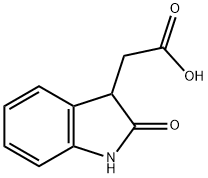
- 2971-31-5
- C10H9NO3
- 191.18
- All (0)
- China (0)
- (0)
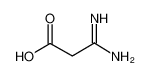
- 6710-83-4
- C3H6N2O2
- 102.09200
- All (0)
- China (0)
- (0)

- 7647-01-0
- ClH
- 36.46
- All (25)
- China (20)
- (25)
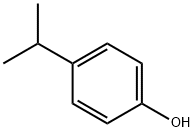
- 99-89-8
- C9H12O
- 136.19
- All (3)
- China (3)
- (3)
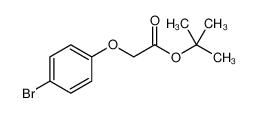
- 282116-88-5
- C12H15BrO3
- 287.15000
- All (0)
- China (0)
- (0)
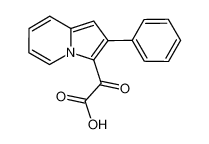
- 892691-05-3
- C16H11NO3
- 265.26300
- All (0)
- China (0)
- (0)
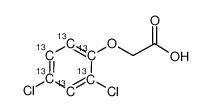
- 150907-52-1
- C2H6Cl2O3-13C6
- 227.00000
- All (0)
- China (0)
- (0)
![1H-Indole-3-acetic acid, α-[[(1,1-dimethylethoxy)carbonyl]amino]-](https://chemcloud-1304660855.cos.ap-shanghai.myqcloud.com/compound/853a650d610c4776a5d237235d1759bb.png?imageMogr2/format/webp)
- 58237-94-8
- C15H18N2O4
- 290.31400
- All (0)
- China (0)
- (0)

- 101752-05-0
- CH5ClO
- 68.50280
- All (0)
- China (0)
- (0)
Related Products More >

- 64-19-7
- Request For Quotation
- 64-19-7
- CNY 3000.0000
- 1ton
- 7647-01-0
- CNY 2000.0000
- 1ton
- 64-19-7
- CNY 15.0000
- 25kg
- 127-09-3
- CNY 80.0000
- 25kg
- 76-03-9
- CNY 2500.0000
- 50kg
- 7647-01-0
- Request For Quotation
- 1ton
- 7647-01-0
- Request For Quotation
- 25kg


Why "Mildly" Acidic? Phenol Politics!
Phenol Pedigree: Its -OH group attaches to a benzene ring. After losing H⁺, electrons delocalize into the ring (resonance), stabilizing the negative charge—a classic phenol trait!
Isopropyl Sabotage: The -CH(CH₃)₂ group pushes electrons toward the ring ("+I effect"). This reduces oxygen’s hunger for electrons, weakening acidity.
→ Result: Less acidic than plain phenol (pKa 10.0) but still 100,000x more acidic than ethanol (pKa 15.9)!
Acidity Hierarchy:
Industrial Impact & Uses
Disinfectants: Mild acidity disrupts bacterial membranes (e.g., hospital cleaners).
Chemical Synthesis: Precursor for antioxidants like BHT (preserves oils and plastics).
Pharma: Builds blocks for anti-inflammatories and paracetamol intermediates.
⚠️ Safety Alert:
Skin/Inhalation: Causes rashes, respiratory irritation—use gloves and masks!
Storage: Keep away from strong oxidizers (e.g., bleach) to avoid explosive reactions.
Regulation: Banned in cosmetics in EU—don’t use for homemade "kombu" face packs!
Fun Chemistry "Jugaad" Test
Add NaOH (base): Mildly acidic phenols form water-soluble salts (C₉H₁₁O⁻Na⁺). If it dissolves, acidity confirmed—no lab equipment needed!
Why "Mild" Matters?
This gentle acidity allows controlled reactions:
Preserves material integrity in plastics.
Safer handling than strong acids like HCl.
Enables selective extraction in solvents like diethyl ether.
Now, why does this matter? In human health, 4-isopropylphenol (also known as p-isopropylphenol) has antimicrobial properties, which is why it’s sometimes used in disinfectants or antiseptic formulations. However, in high concentrations, it can be irritating to the skin and respiratory system—so protective gear is a must when handling it.
In the chemical industry, this compound plays a role in producing resins, plastic stabilizers, and certain agrochemicals. It’s useful because of both its mild reactivity and stability. But like many phenol derivatives, its environmental impact needs attention. Improper disposal can harm aquatic life, so waste handling protocols are critical.
So yeah—4-isopropylphenol is mildly acidic, and it’s a good example of how even small structural tweaks in a molecule can change how it behaves in chemistry and in real-world applications.
Would it turn litmus blue? Unlikely—its acidity is too weak. But compared to something neutral, like ethanol, it’s slightly acidic. Think of it as a "timid" acid: it has the potential but needs a nudge (like strong bases) to donate H⁺.
In short: yes, 4-isopropylphenol is mildly acidic, but weaker than simpler phenols. The isopropyl group tames its tartness!