


 Home
Home
I’m trying to understand the basics of chemistry—specifically, what exactly is an H+ ion? How does it form, and why is it often referred to as a "proton"? Is there a connection between H+ ions and concepts like acidity or pH levels in solutions? Are H+ ions involved in chemical reactions, and if so, what role do they play? Do they exist independently in nature, or do they typically bond with other molecules? Additionally, how does the behavior of H+ ions differ in different environments, such as in water versus other solvents? I’d appreciate a simple explanation of its structure, significance in chemistry, and real-world applications, maybe with examples with how it relates to acids, bases, or biological systems.
What Is an H+ Ion?
Related Encyclopedia

- 12408-02-5
- H2
- 2.01588
- All (0)
- China (0)
- (0)
- 67131-47-9
- CHN2-
- 41.03200
- All (0)
- China (0)
- (0)
- 108703-53-3
- C34H34N2O6+
- 567.65100
- All (0)
- China (0)
- (0)
- 12501-73-4
- H12O4+
- 73.06910
- All (0)
- China (0)
- (0)
- 1333-74-0
- H2
- 2.02
- All (5)
- China (5)
- (5)
- 134161-52-7
- Re2+
- 372.41400
- All (0)
- China (0)
- (0)
- 75884-35-4
- C6F6I+
- 312.95900
- All (0)
- China (0)
- (0)
- 73128-36-6
- FeO4--
- 119.84300
- All (0)
- China (0)
- (0)
- 73145-85-4
- Mn2+
- 109.87600
- All (0)
- China (0)
- (0)
- 92139-40-7
- C10H20P+
- 171.24000
- All (0)
- China (0)
- (0)
Related Products More >

- CNY Request For Quotation
- CNY Request For Quotation
- CNY Request For Quotation
- CNY Request For Quotation
- CNY Request For Quotation
- CNY Request For Quotation
- CNY Request For Quotation
- CNY Request For Quotation


Now, the connection to acidity and pH is huge. Think of pH as a scale that tells you how acidic or basic a solution is. Acids are substances that can donate an H+ ion to a solution. The more H+ ions floating around in a solution, the lower the pH, and the more acidic it is. For example, lemon juice has a lot of H+ ions, so it has a low pH—around 2 or 3—and tastes really sour. On the flip side, bases soak up those H+ ions. When you mix an acid and a base, the H+ ions from the acid react with the base, and that's called a neutralization reaction.
H+ ions are super active in chemical reactions. In organic chemistry, they can act as catalysts, which means they speed up reactions without getting used up themselves. In a reaction called an acid-catalyzed hydration, for instance, H+ ions help an alkene (a type of hydrocarbon) react with water to form an alcohol. In biological systems, H+ ions are everywhere. In our bodies, enzymes—the proteins that make chemical reactions happen in cells—often rely on the right balance of H+ ions to work properly. The pH in our blood has to stay really close to 7.4, and H+ ions play a key role in keeping it there. If the H+ ion concentration in our blood gets too high or too low, it can lead to serious health problems.
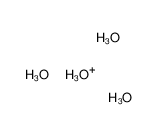
As for whether H+ ions exist on their own in nature, not really. They're so tiny and have such a strong positive charge that they're really reactive. In water, for example, an H+ ion doesn't just float around by itself. Instead, it quickly bonds with a water molecule (H2O) to form a hydronium ion (H3O+). But we still often just talk about H+ ions for simplicity. In other solvents, it depends on the solvent's properties. Some solvents can also "trap" H+ ions in a similar way to water, while others might not interact with them as easily, which changes how acids and bases behave in those solvents.
In real-world applications, understanding H+ ions is crucial. In the food industry, controlling pH (and thus H+ ion levels) helps with things like food preservation and flavor. In batteries, H+ ions move around to create an electric current. And in environmental science, monitoring H+ ions in rainwater helps us figure out if acid rain is a problem in an area. So, even though H+ ions are tiny, they have a massive impact on everything from the chemistry in our test tubes to the chemistry of our planet!
Why is it called a proton? Because at that point, it’s literally just a proton with no electrons to balance its charge. It’s the smallest, simplest ion possible.
Now, H⁺ is the star player in acidity and pH. When an acid dissolves in water, it donates H⁺ ions. For example, hydrochloric acid (HCl) in your stomach splits into H⁺ and Cl⁻. The more H⁺ ions floating around, the more acidic a solution is. pH measures this: lower pH = higher H⁺ concentration. Pure water has a neutral pH of 7 because it has equal H⁺ and OH⁻ (hydroxide) ions. Add acid, and H⁺ spikes, dropping the pH.
H⁺ ions don’t hang out solo in nature for long—they’re way too reactive. In water, an H⁺ instantly grabs a water molecule, forming H₃O⁺ (a hydronium ion). This is why we often say “H⁺” in chemistry but picture it as H₃O⁺ in reality.
In reactions, H⁺ is like a tiny, hyperactive matchmaker. It zips around, reacting with bases to form salts or neutralizing acids. For instance, in your bloodstream, carbonic acid (H₂CO₃) dissociates into H⁺ and HCO₃⁻ (bicarbonate), helping regulate your body’s pH. If your blood gets too acidic (too much H⁺), your kidneys and lungs work to expel it.
In other solvents, H⁺ behaves differently. In liquid ammonia, for example, it forms NH₄⁺ (ammonium) instead of H₃O⁺. The environment changes its “partner molecule,” but the core role stays the same: driving acid-base reactions.
Real-world examples? Battery acid, lemon juice, stomach acid—all rely on H⁺ for their acidic punch. In industry, H⁺ is key in processes like metal refining or water treatment. Even plants use H⁺ gradients in photosynthesis to store energy.
Bottom line: H⁺ ions are tiny but mighty, shaping everything from chemistry labs to your digestive system. They’re never truly alone—always bonding with something—but their presence defines acidity and drives countless reactions. Chemistry 101, simplified!
An H⁺ ion is just a hydrogen atom that’s lost its single electron, leaving behind only a proton—hence why it’s often called a "proton." Hydrogen is the simplest atom (one proton, one electron), so when it loses that electron, all that’s left is the tiny, positively charged proton. That’s why chemists sometimes use "H⁺" and "proton" interchangeably, even though technically, a proton is just the nucleus.
Now, how does it form? In chemical reactions, hydrogen can lose its electron when it’s pulled away by something more electronegative (like oxygen in water). For example, when hydrogen chloride (HCl) dissolves in water, it splits into H⁺ and Cl⁻. But here’s the catch—H⁺ doesn’t really float around alone in water. It’s so small and charged that it immediately bonds to a water molecule, forming H₃O⁺ (hydronium ion). That’s why in reality, "free protons" in water are always attached to water molecules.
This is where acidity comes in. Acids are substances that release H⁺ ions (or protons) in solution. The more H⁺ floating around, the more acidic the solution is, and the lower the pH (pH is basically a measure of H⁺ concentration). Bases, on the other hand, soak up H⁺ ions, reducing acidity.
H⁺ ions are super important in reactions. They speed up certain chemical processes (like breaking down food in your stomach, where HCl provides H⁺ to digest proteins). In biology, proton movement drives energy production—mitochondria pump H⁺ ions to create ATP, the energy currency of cells. Even your nerves rely on H⁺ gradients for signaling!
In different solvents, H⁺ behaves differently. In water, it’s stabilized as H₃O⁺, but in something like ammonia, it might bond differently. The key is that H⁺ is always looking to attach to something because it’s so reactive.
Real-world examples? Battery acid (sulfuric acid releasing H⁺), vinegar (acetic acid giving sour taste), and even antacids (which neutralize excess stomach acid by absorbing H⁺). So, while it’s just a tiny proton, H⁺ is a huge deal in chemistry and life itself!