


 Home
Home
Hi, I'd like to ask—what specific industries use xylene as a key ingredient? Is it commonly mixed with toluene or benzene in solvents or paint thinners? How does xylene's chemical structure make it useful for dissolving other substances? Are there safety concerns when using products containing xylene, like adhesives or printing inks? Thanks!
What Industrial Applications and Chemical Formulations Include Xylene?
Related Encyclopedia

- 1330-20-7
- C8H10
- 106.17
- All (33)
- China (25)
- (33)
- 68953-80-0
- C13H14
- 170.25000
- All (0)
- China (0)
- (0)
- 52487-38-4
- C13H3Cr
- 211.15900
- All (0)
- China (0)
- (0)
- 6443-77-2
- C16H18
- 210.31400
- All (0)
- China (0)
- (0)
- 106-42-3
- C8H10
- 106.17
- All (11)
- China (11)
- (11)
- 122865-69-4
- C6H4FS
- 127.15900
- All (11)
- China (11)
- (11)
- 81-15-2
- C12H15N3O6
- 297.26
- All (2)
- China (2)
- (2)
- 95-47-6
- C8H10
- 106.17
- All (13)
- China (12)
- (13)
- 108-38-3
- C8H10
- 106.17
- All (6)
- China (6)
- (6)
- 125995-89-3
- C5H6LiNP
- 118.02300
- All (22)
- China (20)
- (22)
Related Products More >

- 526-73-8
- Request For Quotation
- 71-43-2
- CNY 6000.0000
- 1ton
- 108-88-3
- CNY 5600.0000
- 1ton
- 108-90-7
- CNY 5000.0000
- 1ton
- 95-47-6
- CNY 1000.0000
- 1ton
- 26264-06-2
- Request For Quotation
- 200L
- 26264-06-2
- Request For Quotation
- 25kg
- 26264-06-2
- Request For Quotation
- 1ton


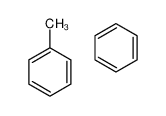
Xylene is often blended with toluene and benzene in solvent mixtures or paint thinners. These combinations optimize solvency power: toluene enhances dissolution of certain resins, while benzene (though restricted due to toxicity) was historically used for its strong solvency. Xylene’s structure—benzene ring with two methyl groups—gives it balanced polarity and non-polarity, making it effective at dissolving both organic compounds (like oils, fats, and polymers) and some polar substances. Its moderate boiling point (138–144°C) also allows controlled evaporation, crucial for applications like paint drying.
Safety concerns with xylene arise from its volatility and toxicity. Inhalation or skin contact with products like adhesives or printing inks can cause eye/respiratory irritation, headaches, or dizziness. Prolonged exposure may affect the central nervous system, and high concentrations are harmful to liver and kidneys. Regulations restrict xylene use in consumer products; for example, workplace exposure limits (e.g., 100 ppm in the U.S.) aim to minimize health risks.
In the chemical industry, xylene is a vital raw material for producing plastics and synthetic fibers. It serves as a precursor in manufacturing terephthalic acid, a key component in polyethylene terephthalate (PET) used for water bottles and food packaging. Additionally, xylene is involved in producing polystyrene and other polymers, contributing to the production of electronics casings, automotive parts, and household items. The pharmaceutical industry also uses xylene as a solvent in drug synthesis and formulation, leveraging its ability to dissolve various organic compounds.
The paint and coatings sector heavily utilizes xylene as a solvent in paints, varnishes, and enamels. It helps regulate the viscosity of these products, ensuring they spread evenly and dry properly. Xylene is also found in paint thinners and removers, where it effectively dissolves dried paint residues. Similarly, in the printing industry, xylene is used in printing inks to maintain fluidity and ensure consistent color application across different substrates.
Xylene is often mixed with toluene and benzene in industrial solvents due to their complementary solvency profiles. Toluene, another aromatic hydrocarbon, has a lower boiling point than xylene, making it useful for formulations requiring faster evaporation. Benzene, though more toxic, was historically used in solvent blends for its strong solvency, but its use has declined due to health risks. The combination of xylene with toluene (and sometimes benzene) creates solvents that balance evaporation rates, solvency power, and cost-effectiveness, making them suitable for applications like adhesive formulations, metal degreasing, and rubber processing.
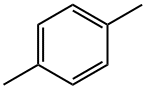
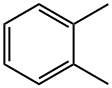
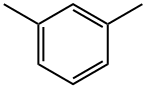
The chemical structure of xylene contributes significantly to its solvency. As an aromatic hydrocarbon with two methyl groups attached to a benzene ring, xylene is a nonpolar molecule. This nonpolar nature allows it to dissolve other nonpolar substances, such as oils, greases, and many organic compounds, through London dispersion forces. The methyl groups on the benzene ring also influence xylene’s physical properties, such as its boiling point and solubility in other organic solvents, making it a versatile component in formulations that require a balance of solvency and volatility.
Despite its utility, xylene poses several safety concerns. Inhalation of xylene vapors can irritate the respiratory system and cause dizziness, headaches, or nausea. Prolonged exposure to high concentrations may affect the central nervous system, leading to coordination issues or unconsciousness. Skin contact with xylene can cause dryness, irritation, or chemical burns, especially if the skin is already abraded. Products like adhesives, printing inks, and paint thinners containing xylene must be used in well-ventilated areas to minimize vapor exposure.
There are also environmental considerations. Xylene is volatile, meaning it can evaporate into the atmosphere and contribute to the formation of ground-level ozone, a component of smog. When released into water or soil, xylene can be toxic to aquatic life and may persist in the environment if not properly treated. Regulatory agencies such as OSHA and EPA have set exposure limits and disposal guidelines to mitigate these risks. For example, OSHA’s permissible exposure limit for xylene in the workplace is 100 parts per million (ppm) over an eight-hour period, while EPA regulates its release into water and air.
In consumer products, the use of xylene is often restricted or labeled due to health concerns. For instance, some countries have banned or limited xylene in household paints and adhesives, pushing industries to adopt safer alternatives like water-based solvents. However, in industrial settings where xylene is essential, workers must use personal protective equipment (PPE) such as gloves, goggles, and respirators to prevent exposure. Proper storage and handling practices, including sealing containers to prevent vapor leakage, are also critical to reducing risks.
Xylene is frequently mixed with other aromatic hydrocarbons, such as toluene and benzene, in solvent formulations. These mixtures enhance the solvency power of the final product, making it more effective at dissolving a wide range of substances. For example, xylene-toluene blends are common in paint thinners and degreasers, while xylene-benzene mixtures (though less common today due to benzene's toxicity) were historically used in industrial solvents. The synergistic effect of these compounds improves their ability to dissolve resins, oils, and greases, making them valuable in manufacturing and maintenance applications.
The chemical structure of xylene—a benzene ring with two methyl substituents—gives it unique solvent properties. The aromatic ring provides stability and strong intermolecular forces, allowing xylene to dissolve non-polar substances effectively. The presence of methyl groups increases its volatility and solvency, making it particularly useful for applications requiring rapid evaporation, such as in printing inks and spray paints. This structure also contributes to xylene's ability to penetrate and soften materials, facilitating adhesion in glue formulations.
However, safety concerns arise when using products containing xylene. It is a volatile organic compound (VOC) that can cause respiratory irritation, dizziness, and headaches upon inhalation. Prolonged exposure may lead to more severe health effects, including liver and kidney damage. Xylene is also flammable, posing fire risks in poorly ventilated areas. Workers handling xylene-containing products, such as adhesives or printing inks, must use proper ventilation, gloves, and respirators to minimize exposure. Regulatory agencies, including OSHA and the EPA, have established exposure limits and safety guidelines to mitigate these risks.
In summary, xylene is indispensable in industries like printing, paints, adhesives, and petrochemicals due to its superior solvent properties. Its chemical structure enhances its effectiveness, but safety precautions are essential to prevent health and environmental hazards.