


 Home
Home
Propylene is a crucial chemical compound, but there's so much more to explore. For instance, how does the molecular structure of Propylene contribute to its unique Properties? Are there different grades of Propylene with varying definitions in industrial applications? And what are the key differences in properties between Propylene and other similar hydrocarbons like ethylene? How does temperature and pressure affect Propylene's physical and chemical properties?
What exactly is Propylene? What are the Properties and Definition of Propylene?
Related Encyclopedia
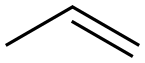
- 115-07-1
- C3H6
- 42.08
- All (4)
- China (4)
- (4)
- 1100058-12-5
- C3H3O3V
- 137.99600
- All (0)
- China (0)
- (0)
- 89601-35-4
- C11H10O4
- 206.19500
- All (0)
- China (0)
- (0)
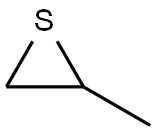
- 1072-43-1
- C3H6S
- 74.14
- All (0)
- China (0)
- (0)
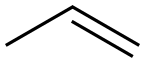
- 6842-15-5
- C3H6
- 42.08
- All (0)
- China (0)
- (0)
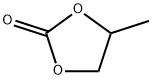
- 108-32-7
- C4H6O3
- 102.09
- All (92)
- China (35)
- (92)
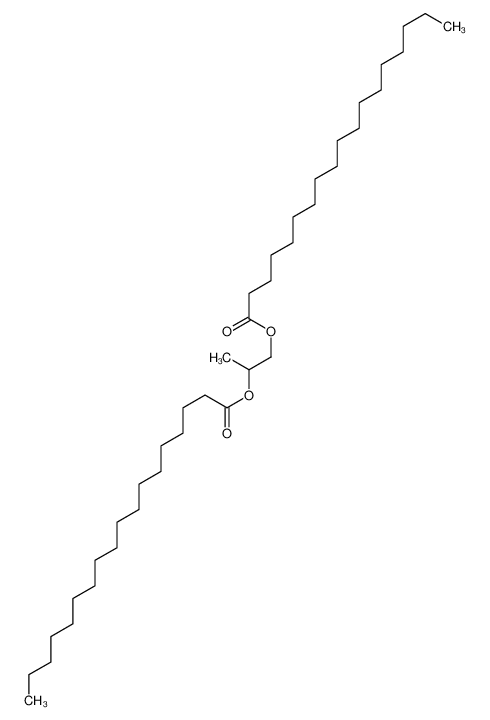
- 6182-11-2
- C39H76O4
- 609.01800
- All (0)
- China (0)
- (0)
- 30928-71-3
- C4H8O3
- 104.10500
- All (92)
- China (35)
- (92)
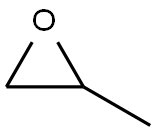
- 75-56-9
- C3H6O
- 58.08
- All (12)
- China (9)
- (12)
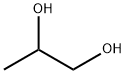
- 57-55-6
- C3H8O2
- 76.09
- All (326)
- China (55)
- (326)
Related Products More >

- CNY Request For Quotation
- CNY Request For Quotation
- CNY Request For Quotation
- 110-98-5
- CNY Request For Quotation
- 110-98-5
- CNY Request For Quotation
- 25322-69-4
- Request For Quotation
- 25322-69-4
- Request For Quotation
- 75-56-9
- Request For Quotation


Now, when it comes to different grades of propylene, yeah, they do exist! In industrial applications, you’ll find what’s called polymer-grade propylene, which is super pure—usually around 99.5% or higher. This grade is perfect for making polypropylene, a widely used plastic. Then there’s chemical-grade propylene, which might have a bit more impurities, but it’s still good for making chemicals and other materials. Each grade is tailored for specific uses, so the purity and impurity levels can really make a difference in how they perform in manufacturing.
Comparing propylene to ethylene, another hydrocarbon, there are some notable differences. Ethylene (C2H4) is simpler, with just one double bond, and it’s often used as a building block for plastics like polyethylene. Propylene, on the other hand, has that extra carbon atom, which not only changes its physical properties but also its reactivity. For instance, propylene tends to form more branched polymers compared to the linear ones from ethylene, which can affect the strength and flexibility of the resulting materials.
Temperature and pressure also play a huge role in how propylene behaves. At higher temperatures, propylene will expand and its vapor pressure increases, making it easier to handle in certain processes. However, if you go too high, it can lead to decomposition or unwanted reactions. On the flip side, increasing pressure can help liquefy propylene, which is useful for storage and transportation. So, in industrial settings, engineers carefully control these conditions to optimize the properties of propylene for whatever process they’re working on.
In summary, propylene’s molecular structure gives it unique properties that make it incredibly versatile in the chemical industry. Different grades cater to specific needs, and understanding how temperature and pressure affect it is crucial for effective use. It’s a fascinating compound with a lot of potential, and there’s always more to learn about it!
Now, about different grades of propylene in industrial applications. Yeah, there are definitely different grades. The purity level is a big factor here. Higher purity propylene is often required for more specialized applications. In some cases, you might have propylene that's 99% pure or even higher. Lower grades might have some impurities in them, and these impurities can affect how the propylene behaves in different processes. For example, if you're using propylene to make high-quality plastics, you'll want a purer grade. But for some other applications where the reaction isn't as sensitive to impurities, a lower grade might be acceptable.
When it comes to comparing propylene with similar hydrocarbons like ethylene, there are some key differences in properties. Ethylene also has a double bond, but its molecular structure is a bit simpler than propylene's. Ethylene is lighter in weight compared to propylene. This difference in weight can affect things like boiling points. Propylene has a higher boiling point than ethylene, which means it's a bit easier to condense propylene into a liquid under normal conditions. Also, their reactivity patterns can vary. While both can undergo addition reactions, the rate and selectivity of these reactions can be different depending on the specific reaction conditions and the molecules they're reacting with.
Now, let's talk about how temperature and pressure affect propylene's physical and chemical properties. Temperature can have a big impact on its state. As the temperature goes up, propylene will eventually turn into a gas if it's not under enough pressure. And if you lower the temperature, it can turn into a liquid or even a solid. Pressure also plays a crucial role. Increasing the pressure can make it easier to keep propylene in a liquid state at higher temperatures. In terms of chemical reactions, both temperature and pressure can affect the rate and outcome of reactions. Higher temperatures usually speed up chemical reactions, but they might also cause unwanted side reactions. And the right pressure can help control the equilibrium of a reaction, making sure you get the products you want. So, in a nutshell, there's a lot that goes into understanding propylene's properties and how they're influenced by all these different factors.
Now, you mentioned grades of propylene. Absolutely, there are different types tailored for specific industrial needs. Some are super pure for making high-end plastics, while others might have a bit more flexibility in their composition for less demanding applications. It's like choosing between gourmet and regular groceries – both get the job done, but one's a bit fancier.
When you compare propylene to its hydrocarbon buddies like ethylene, you'll notice some key differences. Ethylene's a two-carbon guy with a double bond, and it's used for making things like polyethylene, which is everywhere in packaging. Propylene, on the other hand, brings a bit more bulk and different reactivity, leading to distinct products like polypropylene, which is tough and versatile.
Temperature and pressure, they play their part too. Heat up propylene, and it gets more energetic, ready to react faster. Crank up the pressure, and you can change its physical state or push it into reactions it might not normally go for. It's like adjusting the knobs on a complex cooking recipe – a little tweak here, a big change there. So, propylene, it's a fascinating, versatile little molecule with a lot of stories to tell in the world of chemistry.